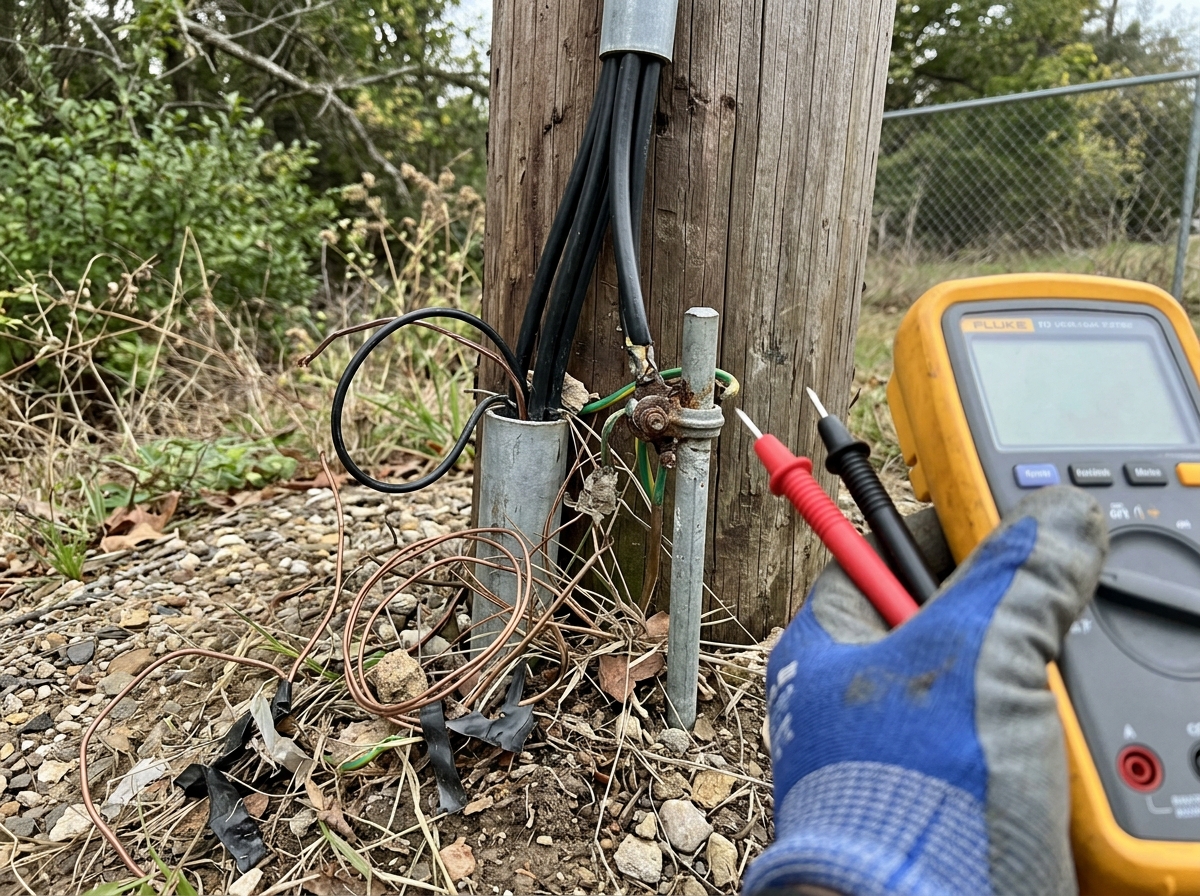
If you searched for 'bird nesting welding definition,' you are almost certainly not looking for a welding technique. The phrase is genuinely confusing because 'bird nesting' is a real term in MIG welding, but it has nothing to do with actual birds. This guide is going to untangle both meanings quickly, help you figure out which situation you are actually dealing with, and give you a clear, conservation-minded action plan for the bird-related scenario you are most likely here to solve.
Bird Nesting Welding Definition: Meaning, Safety, and Next Steps

Maya Bennett
22 Mar 2026
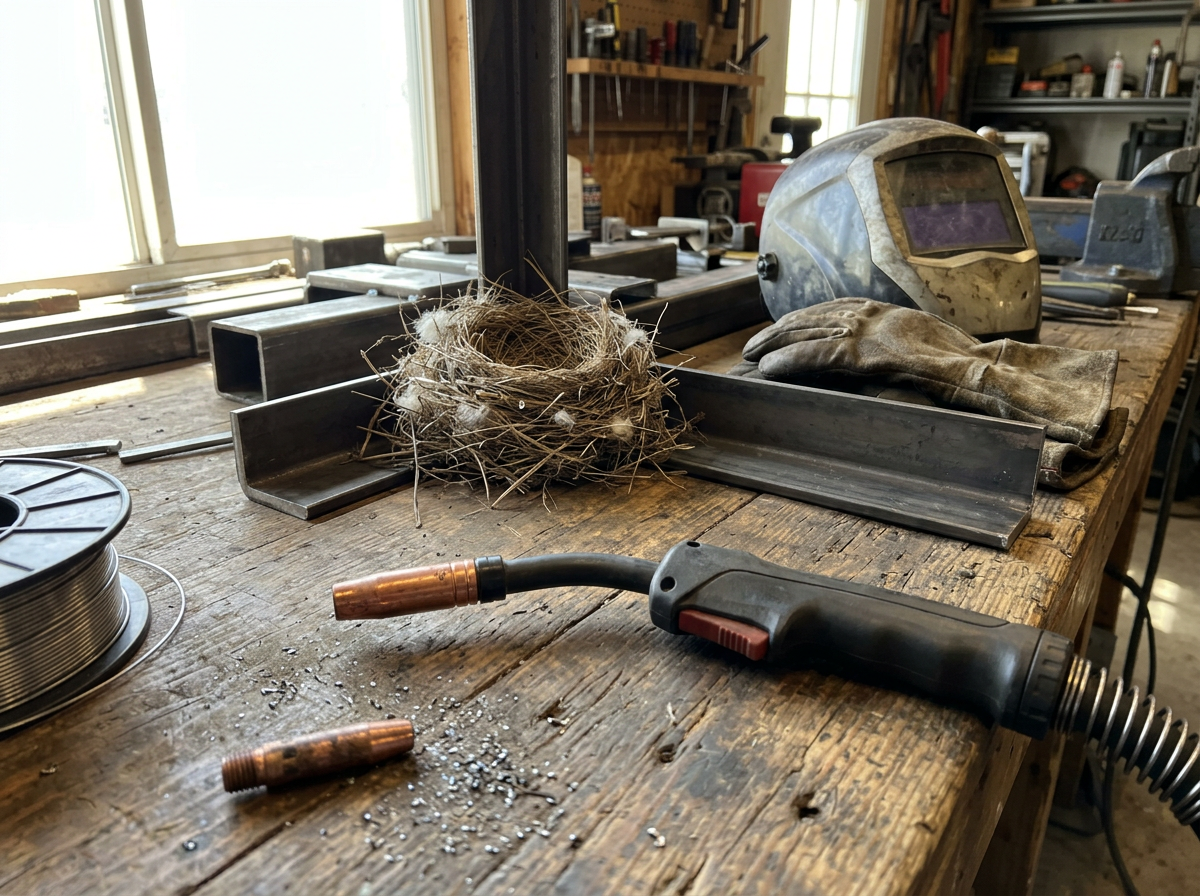
What 'Bird Nesting Welding' Actually Means (and What It Doesn't)
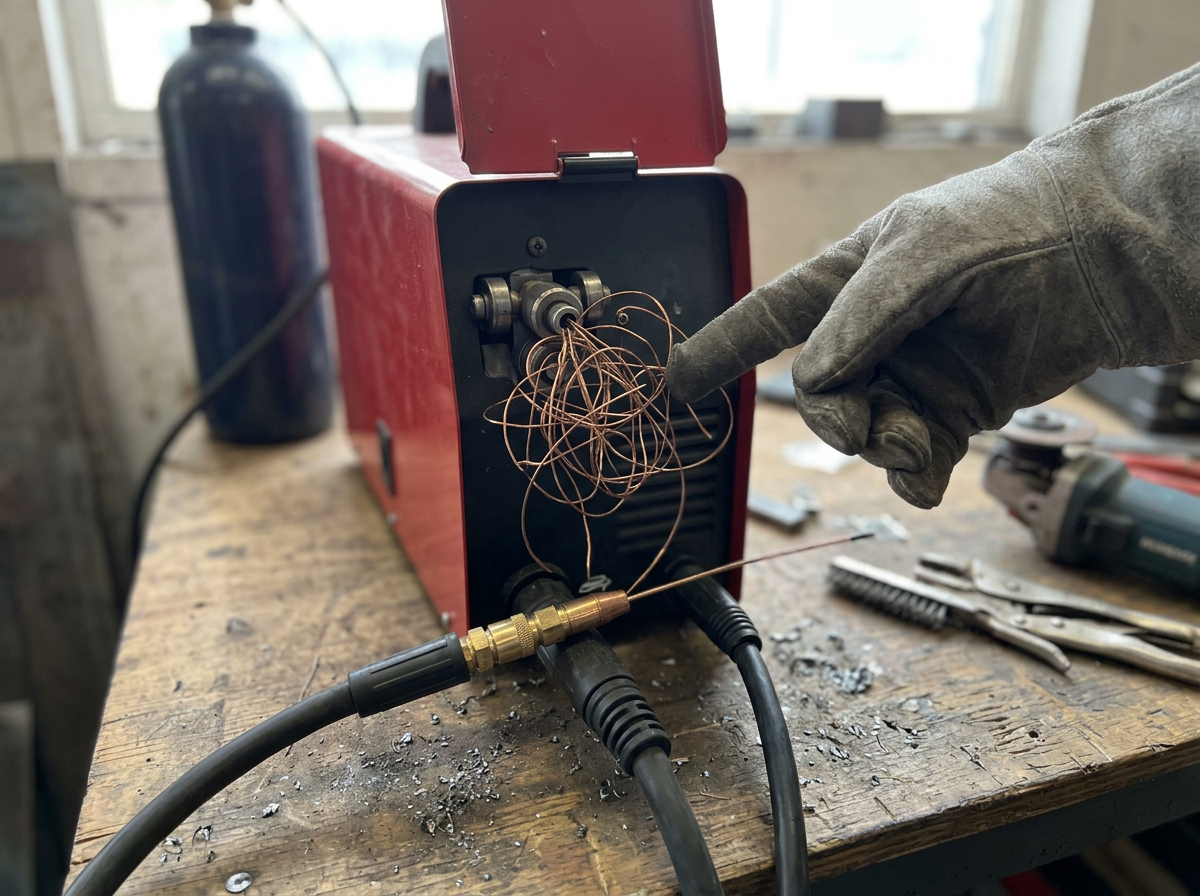
In MIG/GMAW welding, 'bird nesting' is a well-known wire-feed defect. It happens when the welding wire tangles or bunches up inside the feed system, typically near the contact tip, forming a chaotic clump that looks like a bird's nest. The root causes are usually poor wire feedability, incorrect drive-roll tension, a worn or mismatched liner, or the contact tip sitting too close to the work. This is entirely a machine and materials problem, and it has no connection to actual birds, their nests, or wildlife.
So what does this mean for you? If you are on a welding forum troubleshooting a wire-feed issue, you want a welding resource, not this one. But if you landed here because you are dealing with a real bird nest near a welded structure, a wire mesh enclosure, a metal vent, or a building repair involving fasteners or hardware cloth, you are in exactly the right place. That is the gap this guide fills: the practical, conservation-first advice for people who find themselves at the intersection of birds, nests, and human-built (often metal) structures.
One more thing to be crystal clear about: welding is never, under any circumstances, a method for handling, relocating, or managing bird nests. If you have seen any suggestion that heat, metal fabrication, or physical sealing is appropriate near an active bird nest, set that aside immediately. It is dangerous to the birds, potentially illegal, and unnecessary. There are safe, legal options, and this guide covers them.
Quick ID: Is It a Nest, a Repair Material, or a Structure Issue?
Before you do anything, take two minutes to look carefully at what you have. This one step determines every decision that follows. Grab your phone and take a few photos from different angles. You will thank yourself later, especially if you need to report the find or track the nest's progress.
Here are the three scenarios most people searching this phrase are actually facing, and the quick cues that tell them apart:
Scenario 1: An Active or Recent Bird Nest
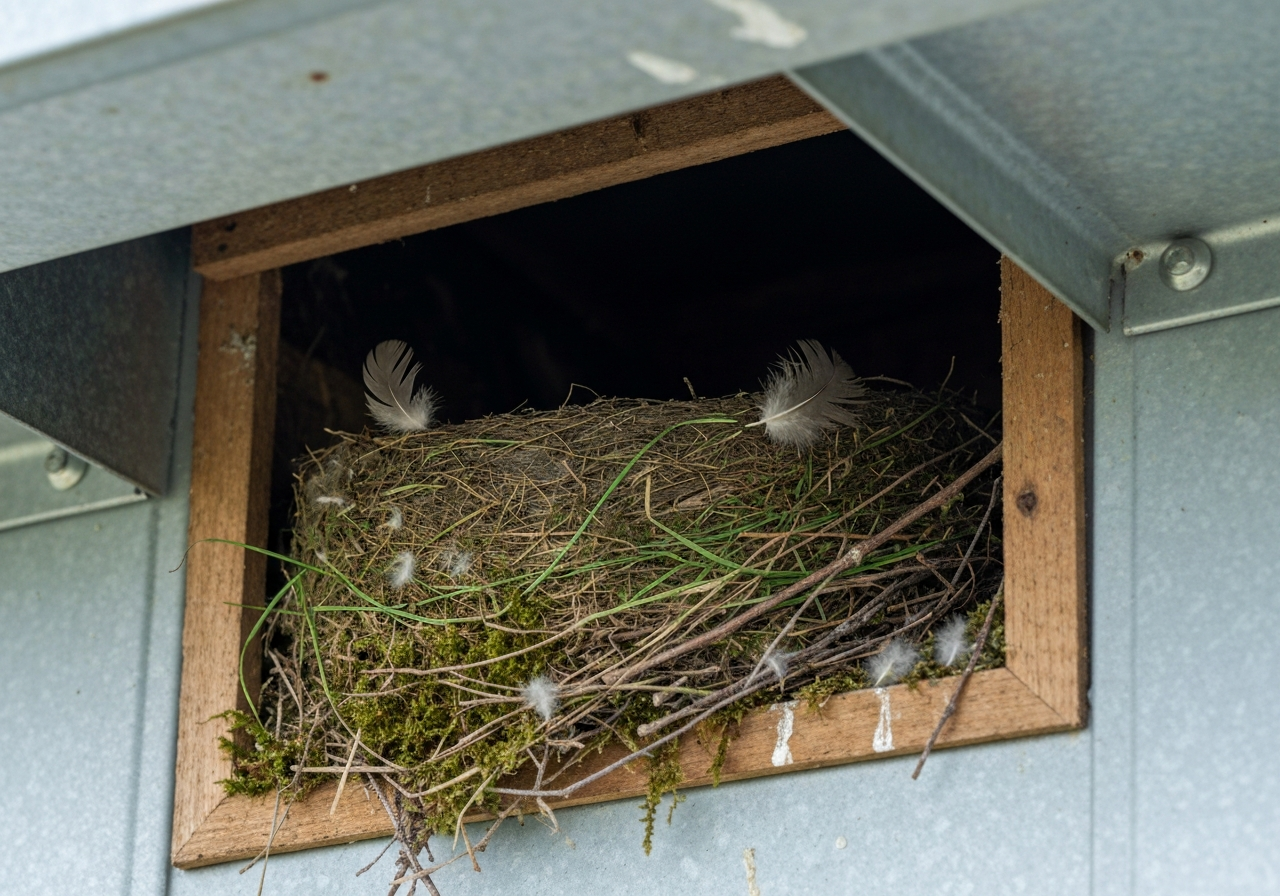
You are looking at a cup, platform, or cavity structure made from natural materials like grass, twigs, mud, moss, spider silk, feathers, or plant down. It may be tucked into a vent, gutter, eave, metal beam, chain-link fence, or welded wire enclosure. Size ranges widely: a hummingbird nest is roughly the size of a walnut (about 4 cm across), while a red-tailed hawk platform nest can span more than 90 cm. Look for eggs, hatchlings, or an adult bird sitting on or near the structure. If you see any of these, stop all activity nearby immediately.
Scenario 2: Bird-Building Materials Caught in a Structure
Sometimes a bird is mid-build and the nest is not complete yet. You might see loose strands of grass, string, or fur woven into a wire grate or tucked behind a bracket. If there are no eggs or young and the structure is clearly incomplete, you have a slightly wider window to act, but the legal protections in many jurisdictions still apply the moment nest-building begins for protected species.
Scenario 3: A Nest on or Near a Welded or Fastened Structure
This is the scenario that most closely connects the 'welding' part of your search to actual birds. A bird may have nested on a metal structure, inside a welded cage or enclosure, on a conduit bracket, or within a corrugated metal roof. Your concern may be about the structural repair or the safety of people working on the structure. The nest is real and active, and you need to ${anchortext} without harming it. what is bird nesting in marriage. what is bird nesting in welding
Safety First: Protecting Birds, People, and the Habitat
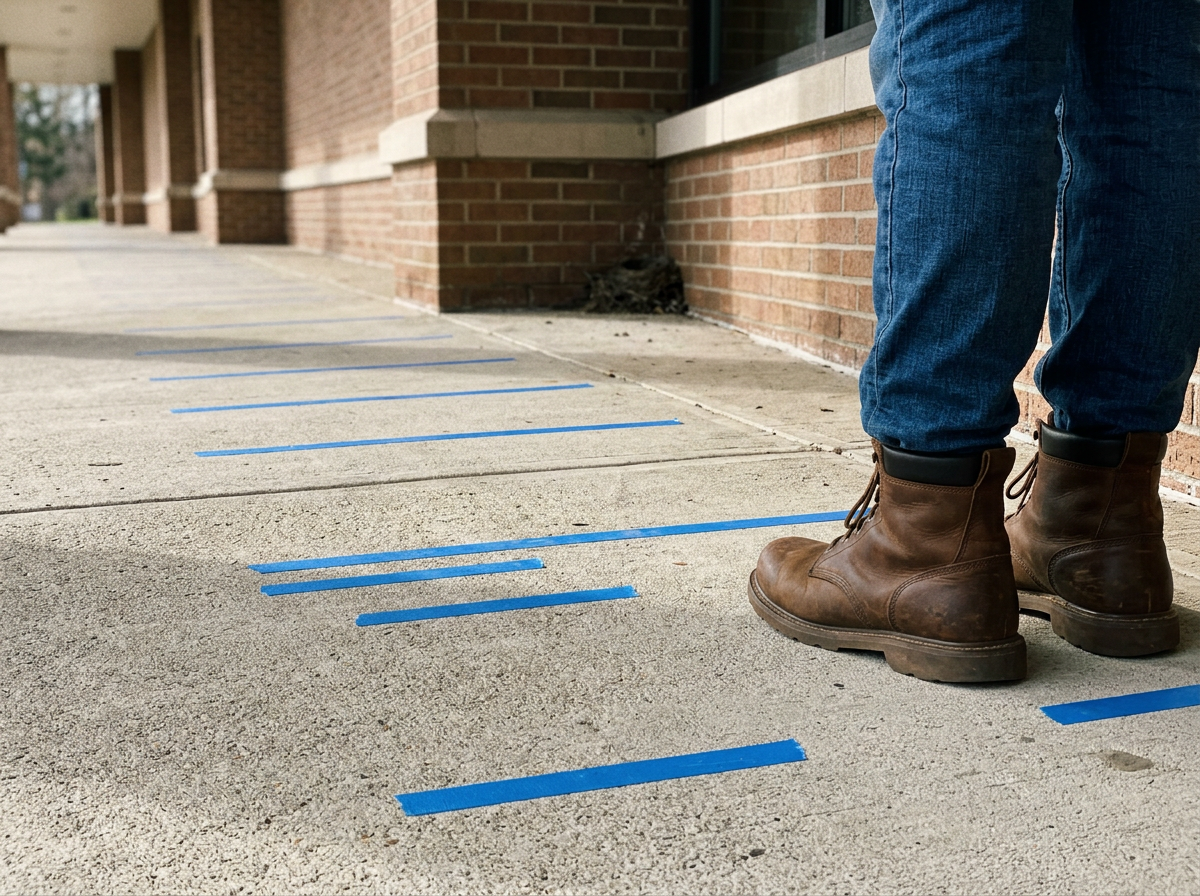
Whether you are a homeowner, a maintenance worker, or a birdwatcher who stumbled onto this situation, the first priority is the same: create a buffer zone and stop any disruptive activity near the nest. Most songbirds will abandon a nest if disturbed repeatedly during incubation. Raptors and colonial nesters can be even more sensitive to human presence during certain stages.
- Stay at least 3 to 5 meters (10 to 16 feet) from any nest with eggs or young. For large raptors like hawks or ospreys, that buffer should be 30 meters (about 100 feet) or more.
- Keep noise levels low. Power tools, grinding, and loud conversation can flush an adult bird and leave eggs or chicks exposed.
- Avoid direct eye contact or prolonged hovering near the nest. Even well-meaning observation can cause stress.
- Do not attempt to move, touch, or inspect the nest contents unless you are a licensed wildlife rehabilitator.
- If the nest is in a location that poses a genuine safety hazard (e.g., inside an electrical panel or blocking a gas vent), contact your local wildlife authority before taking any action.
For people working on structures: if you discover a nest during a repair or maintenance job, the correct move is to pause work in that zone. Document the find with photos, note the date and species if you can, and consult with the property owner and a wildlife officer before resuming. Many a job has been paused for four to six weeks during nesting season, and that is simply the right call.
If You Find an Active Nest: The Legal and Ethical Rules
In the United States, the Migratory Bird Treaty Act (MBTA) protects the nests, eggs, and young of nearly all native bird species. It is a federal crime to destroy, move, or disturb an active nest (one containing eggs or young) without a federal permit. Similar protections exist in Canada under the Migratory Birds Convention Act, in the UK under the Wildlife and Countryside Act, and across most of Europe under the EU Birds Directive. If you are outside these regions, check your national or regional wildlife protection laws before doing anything. 'I didn't know' is not a legal defense.
The practical upshot is simple: if the nest is active, your options without a permit are very limited. Here is the ethical and legal framework broken into clear do's and don'ts:
| Action | Active Nest (Eggs or Young) | Empty or Abandoned Nest (Post-Fledging) |
|---|---|---|
| Remove the nest | Illegal for most native species without a permit | Generally legal once confirmed abandoned; check local rules |
| Move the nest a short distance | Illegal without a permit; birds may abandon it | Permitted in most jurisdictions once empty |
| Install a physical barrier nearby | Allowed if it does not block adult access | Allowed freely |
| Resume loud construction work nearby | Not recommended; may cause abandonment | Fine once nest is empty and season is over |
| Photograph and document | Always allowed; encouraged | Always allowed |
| Contact a wildlife officer | Highly recommended | Optional but useful for record-keeping |
If you are unsure whether a nest is active, treat it as active until you have clear evidence otherwise. An empty nest that was just vacated today is still legally protected in many jurisdictions for a period of time. When in doubt, call your local wildlife agency or a licensed wildlife rehabilitator and describe what you see.
Handling Damaged Nests or Conflicts with Human-Made Structures
This is the section most people are really here for: the practical fix when a nest is in a problematic location. Maybe it is in a dryer vent that needs to function, on a security camera, inside a guttering system, or on a piece of machinery. Here is a step-by-step decision path.
- Confirm the nest status. Take photos. Are there eggs or live young? If yes, stop and jump to the legal/ethical section above. If the nest appears empty and cold, probe gently with a stick (do not use your hand) and listen for any sounds of life before concluding it is abandoned.
- Identify the species if you can. Some species, like European starlings and house sparrows in the US, are not protected under the MBTA and may be treated differently. Native species are almost universally protected. If you cannot ID the bird, assume it is protected.
- Assess the structural risk. Is the nest causing an immediate safety hazard? A nest inside an active gas exhaust vent, for example, is a genuine emergency. In that case, contact your wildlife authority immediately and explain the safety risk. They can advise on emergency permit options.
- If there is no immediate safety hazard, create a temporary shield. Use hardware cloth, a simple wooden baffle, or a tarp to redirect wind, rain, or predators away from the nest without blocking the adult bird's access. This is always permitted and can buy you the four to six weeks you need.
- Adjust your schedule. Most songbird nesting cycles run 10 to 28 days from egg-laying to fledging. If you can shift your maintenance or construction timeline by that window, you avoid the conflict entirely. Mark your calendar and check back.
- Document everything. Write down the date you found the nest, the estimated stage (eggs, hatchlings, fledglings), and any actions you took. This protects you legally and helps you track seasonal patterns for future prevention.
For nests that have been partially damaged (by weather, a predator, or accidental disturbance), the guidance is to leave the nest in place if the structure is still largely intact and the adults are returning. Birds are surprisingly good at repairing a damaged cup or adding new material to a platform nest. Only if the nest is completely destroyed and young are on the ground should you consider contacting a rehabilitator for guidance on emergency care.
Relocation and Restoration When You Have Permission
If you have confirmed the nest is empty and legally removable, or if you are operating under a permit for an active nest, relocation is sometimes possible. The success rate for relocating active nests is low: most songbirds will not follow a moved nest, and the disturbance alone can cause abandonment. For that reason, permitted relocation is typically reserved for situations with genuine conflict (e.g., a nest on heavy machinery that must operate or a nest blocking a critical exhaust).
If relocation is permitted and appropriate, here is how to do it right:
- Move the nest no more than 1 to 3 meters (3 to 10 feet) from its original position. Keep it at the same height and orientation relative to the sun and prevailing wind.
- Use a small wire basket or a platform of similar material to support the nest in its new spot. Attach it securely so it cannot shift or tip.
- Work quickly and quietly. Spend less than two minutes at the nest site. Have your new mounting point already prepared before you touch the nest.
- Step back immediately and observe from at least 10 meters away for 30 to 60 minutes. If the adults do not return within an hour, the relocation has likely failed and you should contact a wildlife rehabilitator.
- Never wash or significantly reshape the nest. The smell and structure are part of how adults recognize it.
For empty nests you want to preserve (perhaps for display, education, or monitoring a recurring nest site), wait until the breeding season is fully over in your region. In the Northern Hemisphere, that is typically late August through September for most passerine species, though raptors and some cavity nesters may use a site well into October. Gently remove the nest, allow it to dry fully in a warm, ventilated spot for 48 hours, and store it in a sealed container to prevent mites or insect infestation.
Aftercare: Monitoring, Predator Deterrence, and Preventing Repeats
Once the immediate situation is resolved, your job is not quite done. Good aftercare protects the birds that are still there, prevents future conflicts at the same site, and sets you up for a much easier experience next season.
Monitoring After Fledging
Check the nest site every two to three days after you believe the young have fledged. Fledglings often spend one to three days on the ground near the nest before they can fully fly, so keep pets indoors and reduce foot traffic in the area. Once the site is confirmed empty and quiet for five or more days, you can safely move to the next phase.
Predator Deterrence That Does Not Harm Wildlife
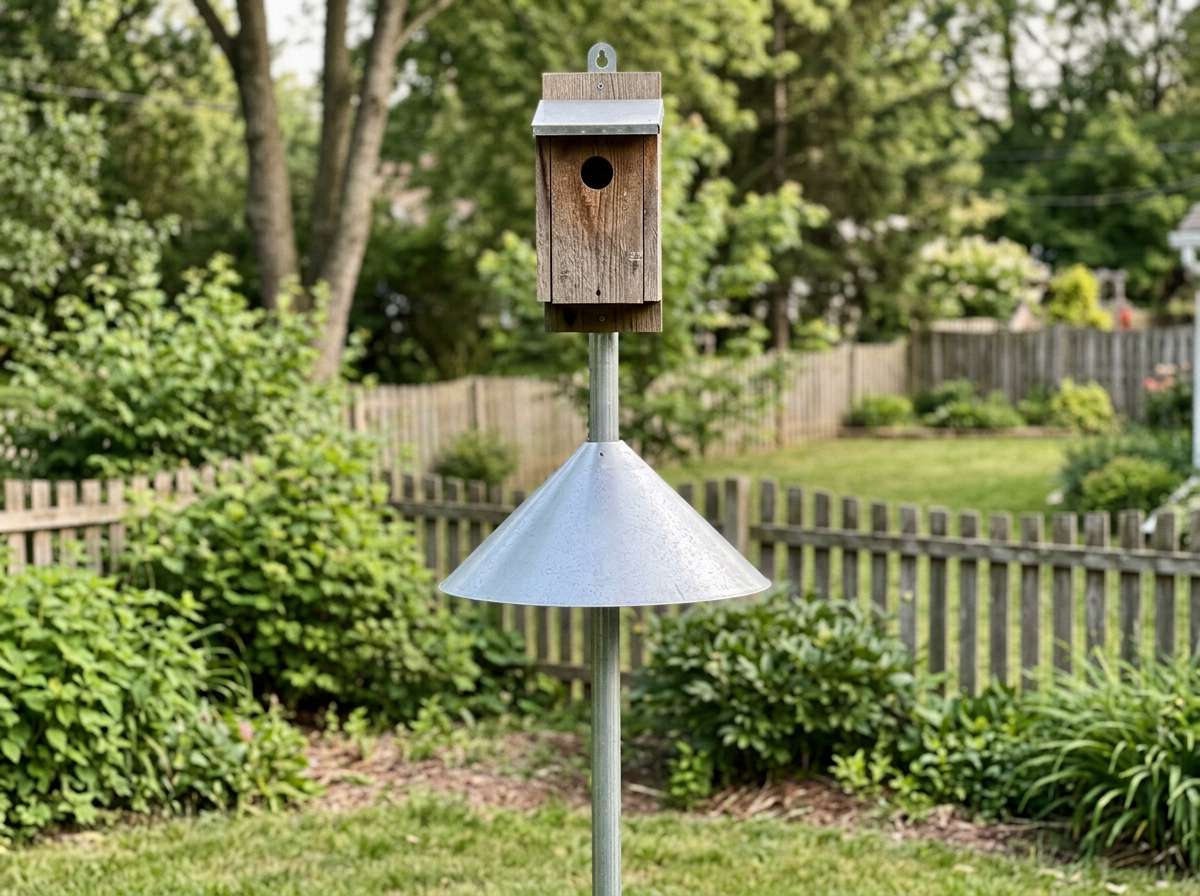
If you want to protect a nest site that birds return to year after year (like a nest box or a favored ledge), predator deterrents are a smart, humane investment. The key is to use only non-toxic, non-lethal methods. A metal baffle on a nest box pole (a smooth, cone-shaped collar mounted at least 1.5 meters above the ground) is highly effective against raccoons and cats. Prickle strips made of plastic (not metal or broken glass) can deter corvids and larger predators from landing on ledges without injuring them.
- Mount nest boxes on smooth metal poles with a 45 cm (18 inch) baffle cone at least 1.5 m above the ground.
- Trim any overhanging branches within 2 to 3 meters of a nest box to eliminate launch points for predators.
- Avoid sticky gels or adhesive deterrents. They can trap small birds and are cruel to a wide range of wildlife.
- If cats are a recurring predator threat, temporary wire mesh fencing around the base of shrubs or structures during nesting season is a practical, reversible solution.
- Do not use decoy predators (plastic owls, hawk kites) near active nests. They can spook nesting adults as effectively as real predators.
Preventing Nesting in Conflict Zones Next Season
The best time to block a problematic nest site is after the breeding season ends and before the next one begins. In most of the Northern Hemisphere, the window is October through late January. Use hardware cloth (a welded wire mesh with openings no larger than 6 mm for small birds, or 25 mm for larger species) to permanently seal vents, gaps in eaves, and openings in structural elements. Install vent covers rated for wildlife exclusion, which have internal flaps that allow airflow but block entry. If you are working on a metal structure, pre-drilling and fastening exclusion mesh before birds arrive is far simpler than dealing with an active nest mid-season.
Finally, think about offering an alternative. If birds have nested in a problematic spot repeatedly, it is usually because that spot meets their nesting requirements: shelter, height, proximity to food. Mounting an appropriate nest box within 5 to 10 meters of the old site, before the breeding season starts, gives the returning birds a legal and convenient alternative. Species like house wrens, bluebirds, tree swallows, and many others will readily adopt a well-placed box, and that redirects the nesting activity away from your vents or gutters without any conflict.
The bottom line: 'bird nesting welding definition' is an ambiguous phrase, but the practical path forward is straightforward. Identify what you are looking at, respect the legal protections around active nests, take the minimum necessary action, and use the post-fledging window to make smart, wildlife-friendly modifications. That approach keeps both the birds and you on the right side of the law, and it usually solves the conflict permanently.
FAQ
How can I tell whether the “nest” I’m seeing is actually active if I don’t see eggs or babies?
Treat it as active if you see adult birds entering or leaving repeatedly, fresh material being added, or droppings below the structure. If you can, observe from a distance for 30 to 60 minutes at the same time of day, and avoid using bright lights or lingering near vents or eaves.
What if I started welding or cutting metal before I noticed there was a nest?
Stop immediately and create a quiet buffer zone. Document what you did (date, time, area, and what portion of the structure was disturbed), then contact the property owner and a local wildlife agency or wildlife rehabilitator for guidance. If the nest contains eggs or young, restarting work can create additional unlawful disturbance even if the nest “looks unchanged.”
Is it ever safe to cover a nest with mesh or a tarp while work continues?
No. Any action that physically blocks the nest or changes access can count as disturbance, and some materials can trap birds or expose them to overheating. Use exclusion only when the nest is confirmed empty and you can do it without interacting with any birds or nest material.
How long after the birds leave can I assume the nest is legal to remove?
In many places, an apparently empty nest can still be protected for a period, and “just vacated today” is still risky. The practical approach is to treat it as protected until you have clear evidence of fledging and then wait for a quiet window (several days) before removal, ideally after confirming local rules.
What should I do if the nest is in a critical location, like an electrical panel or ventilation system?
Pause work in that zone and ask a wildlife professional for a site-specific plan. If the nest must be prevented in the future, plan wildlife exclusion after the breeding season with properly rated vent covers and correctly sized hardware cloth openings, rather than trying to force immediate repairs during active nesting.
Can I relocate a nest myself if I’m trying to save time on a repair job?
Typically no. Even where removal is discussed, relocation success is low and disturbance alone can trigger abandonment. Unless you have a valid permit and instructions for that species and situation, relocation is usually the wrong move.
If the nest is empty, how do I minimize health risks like mites or insects before sealing up the area?
Remove the nest gently only after it’s confirmed empty and legally removable, then let it dry fully in a warm, ventilated space before storage, and avoid crushing dried material. After removal, clean the area with appropriate methods (often HEPA vacuuming, not dry sweeping) to reduce allergen and insect exposure.
Does using welding wire-feed “bird nesting” affect birds at all?
No, the MIG/GMAW “bird nesting” defect is a machine issue, not a wildlife scenario. If your concern is wildlife, focus on what species are nesting, where the nest is located, and whether it is active, rather than troubleshooting welding equipment as if it were connected to actual nests.
What are common mistakes people make when they try to solve the “bird nest on a structure” problem?
The big ones are rushing repairs during incubation, assuming an empty-looking nest is safe, using deterrents while a nest is active, and sealing openings without first confirming the nest is gone. Another frequent mistake is relocating people or tools too close repeatedly, even if no “damage” is done.
Who should I call for help, and what details should I have ready?
Start with your local wildlife agency, or a licensed wildlife rehabilitator if birds are involved. Have photos from multiple angles, the exact location (which vent, ledge, or metal component), approximate species guess if you can make one, whether adults are present, and whether eggs or young are visible. That lets them advise on legal status and safest next steps.
Next Article
What Causes the Electrode to Bird-Nest and How to Fix It
Learn what causes electrode bird nesting, from loose wiring and arcing to actual bird nests, plus fixes and safe prevent