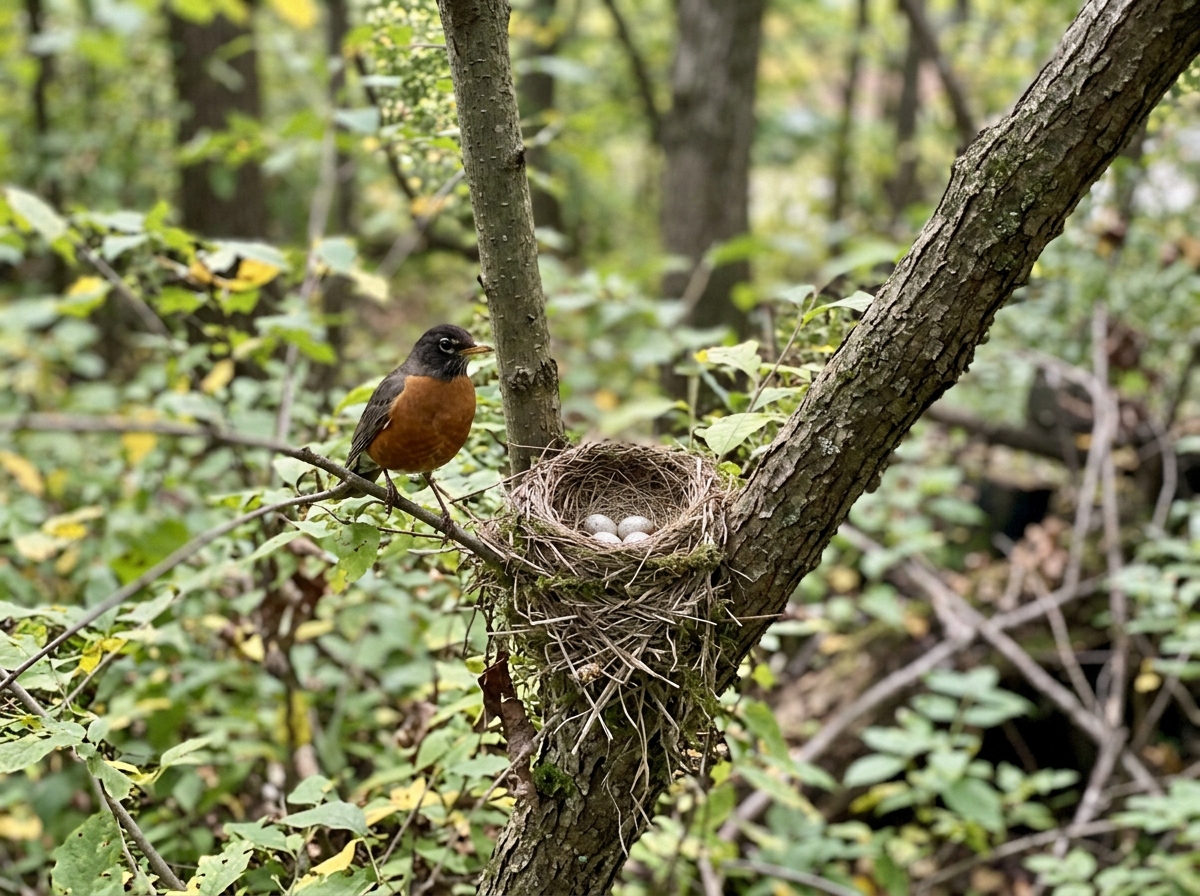
If you move a bird nest, the most likely outcomes are parental abandonment, exposure of eggs or chicks to fatal temperature changes, and increased predation risk. How bad it gets depends almost entirely on three things: whether the nest is active (eggs or live chicks inside), what species built it, and how far or how disruptively you moved it. This guide walks you through what actually happens, how to tell if you're dealing with an active nest, what to do if you've already disturbed one, and how to handle the situation legally and ethically.
What Happens If You Move a Bird Nest and What to Do

Maya Bennett
22 Mar 2026
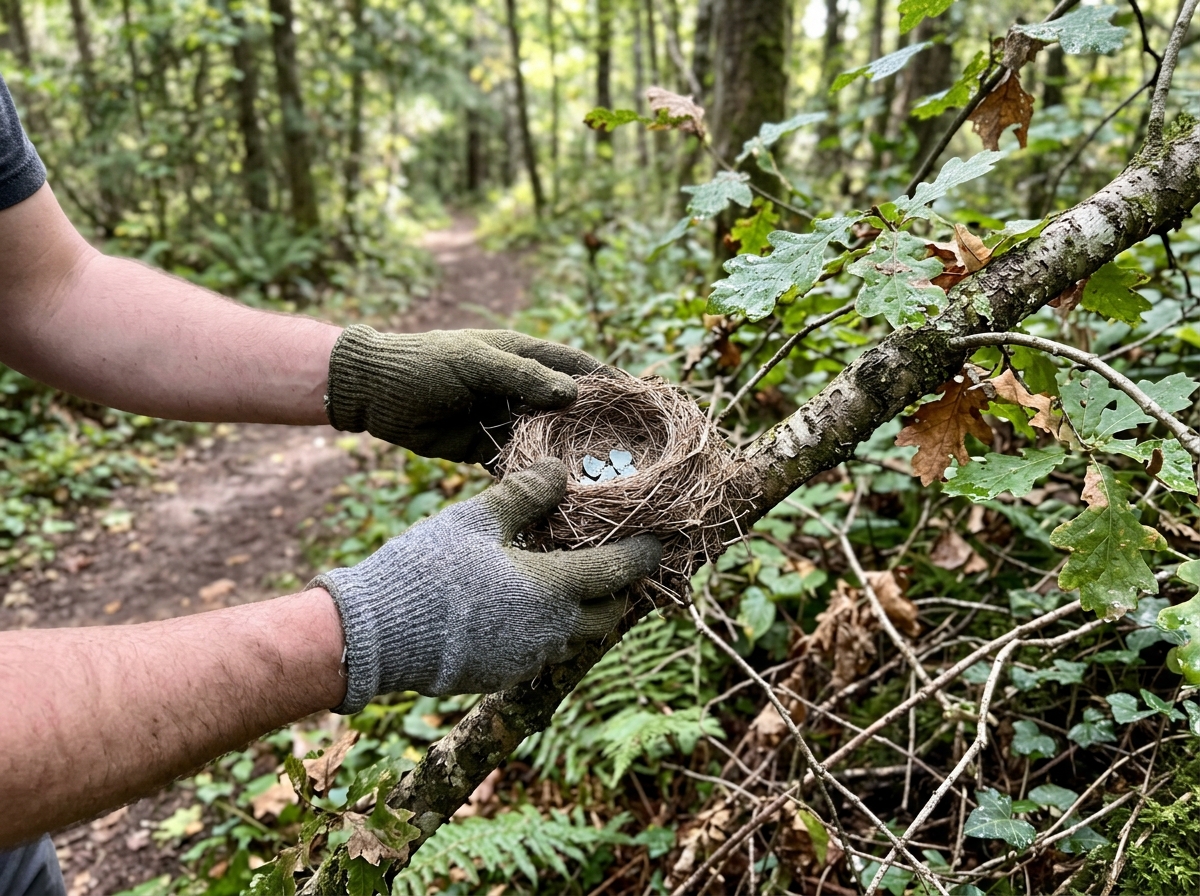
What moving a nest does to eggs and chicks
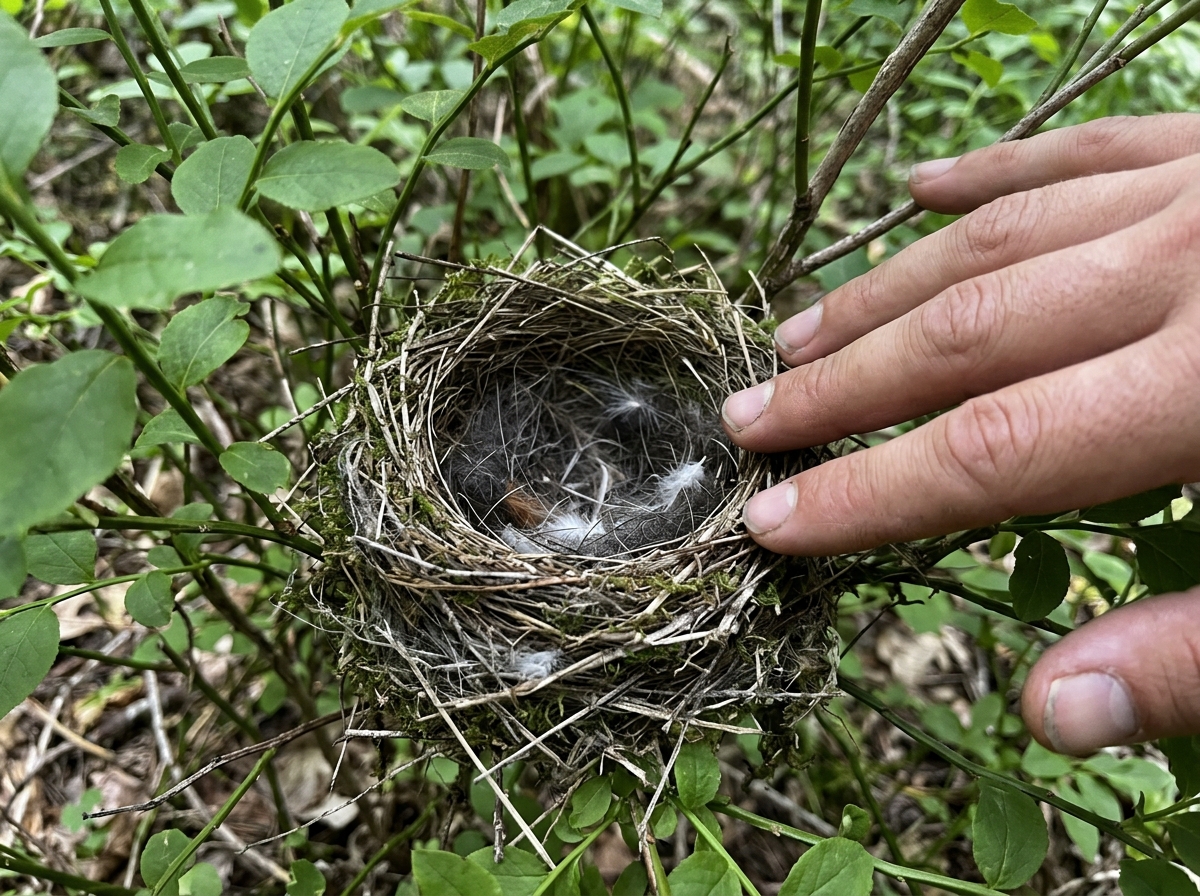
A bird nest is not just a container. It's a precisely constructed microhabitat, and when you move it, you disrupt almost every function it serves at once. Here's what can go wrong.
Temperature exposure
Eggs and nestlings can't regulate their own body temperature. They depend on the adult bird sitting on the nest and on the nest's insulating structure to stay within a narrow survivable range. Move a nest even a few feet into a shadier or windier spot, and eggs can chill and stop developing within minutes on a cold day. In direct sun, they can overheat just as fast. Research on temperature variability confirms that even brief periods of adult absence during cold snaps can be lethal for eggs and nestlings. Relocation makes that risk almost certain.
Parental abandonment
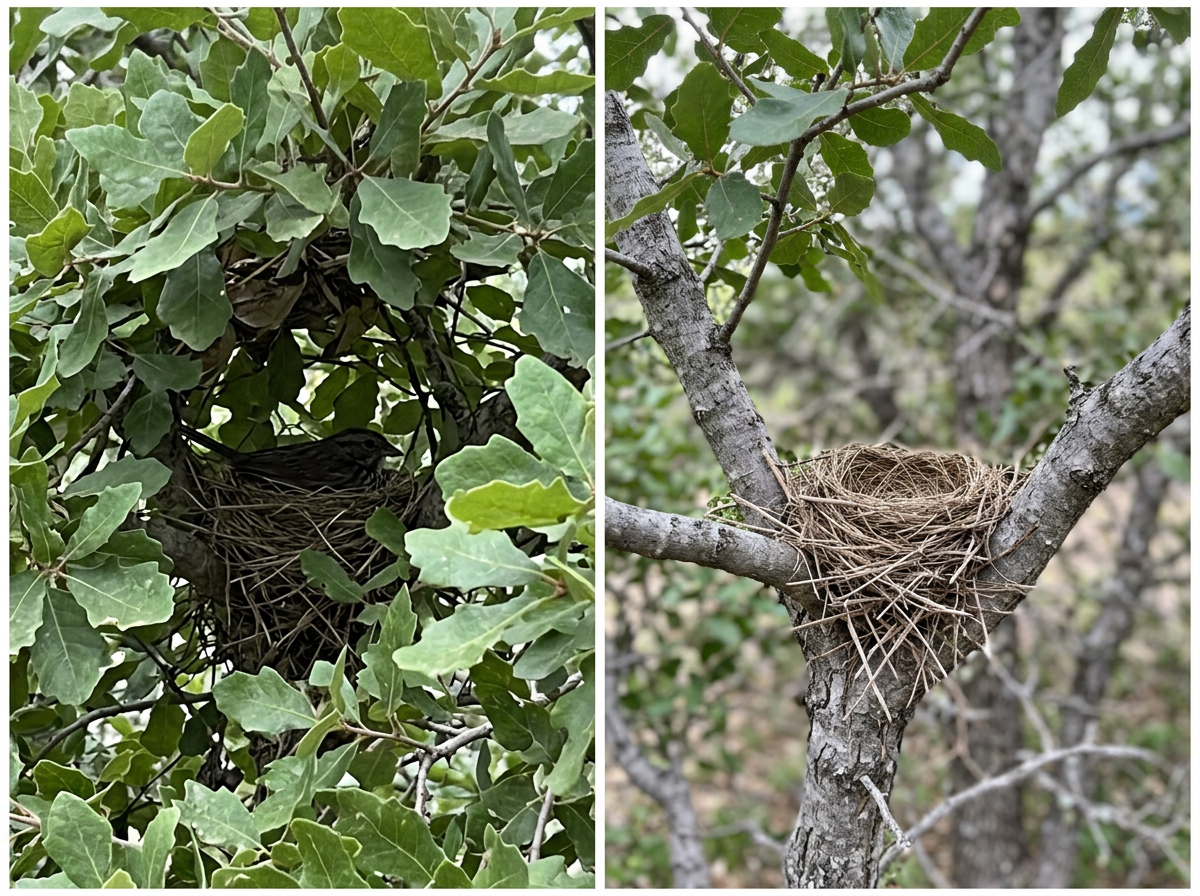
Adult birds locate their nest primarily by memory and landmark recognition. Move the nest even 10 feet, and the returning parent will go to where the nest was, not where it is now. If they can't find it quickly, and if the disturbance was stressful enough, they may abandon the effort entirely. Audubon is clear on this: repeated disturbance or significant disruption can cause birds to abandon both eggs and hatchlings, which is a death sentence for the clutch. Some species, especially cavity nesters and colonial birds, are more sensitive to this than others.
Premature fledging and injury
Nestlings that are disturbed may leap or fall from the nest before they are physically ready. Cornell Lab's NestWatch notes explicitly that disturbing young during the nestling stage can cause them to leave the nest prematurely, and chicks on the ground before they can fly have almost no chance of survival without intervention. Wading birds are particularly prone to this: the Florida Fish and Wildlife Conservation Commission documents cases where frightened adults knocked eggs and young out of the nest entirely when flushed from the site.
Increased predation
Nests are positioned where they are for a reason. That overhang, that dense shrub, that particular fork in the tree: all of it reduces visibility from predators. A moved nest in a new location hasn't been vetted that way. Combined with stressed or absent parents and potentially stressed chicks making more noise than usual, a relocated nest becomes much easier for cats, crows, raccoons, and snakes to find.
Active vs. inactive: how to tell before you touch anything
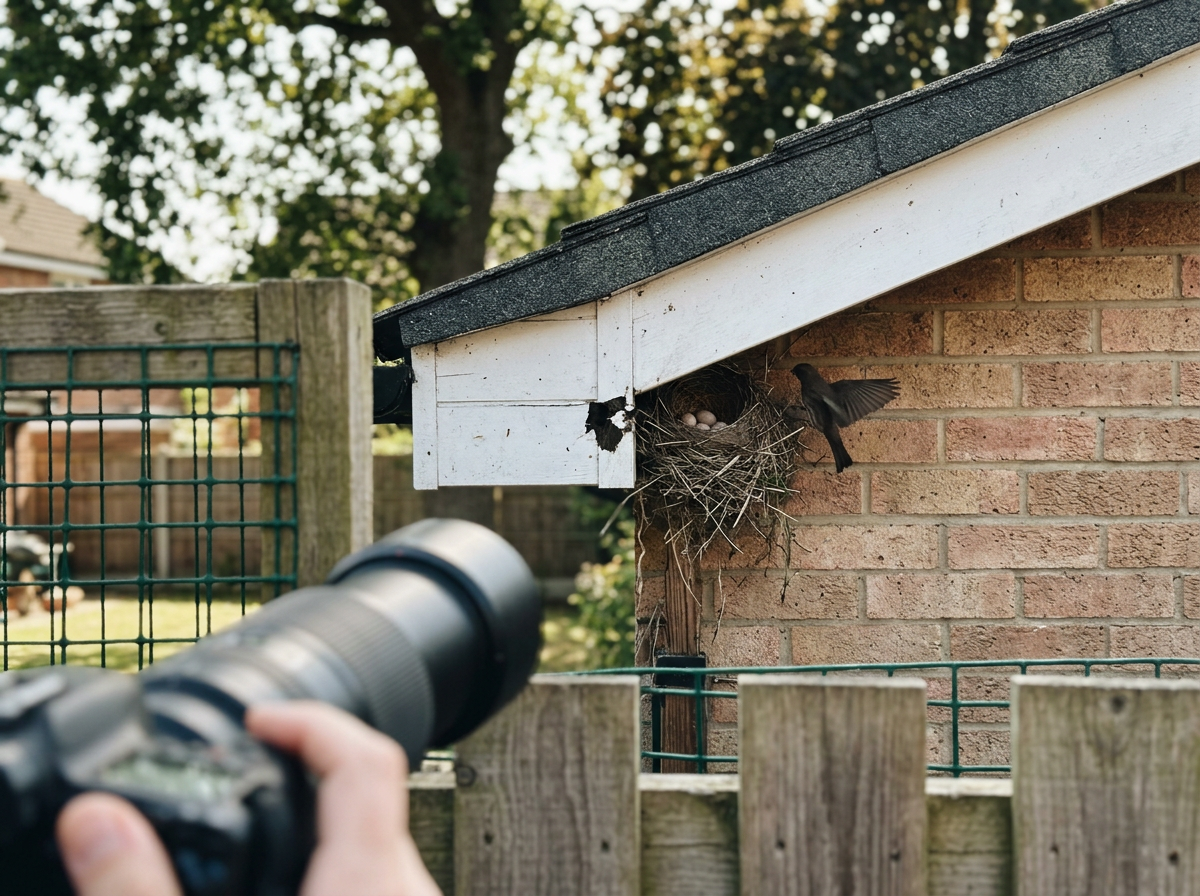
This distinction matters enormously, both legally and practically. An active nest is one that contains eggs or live young. An inactive nest is empty, either because the birds haven't started laying yet, because the brood has successfully fledged, or because the nest was abandoned. The U.S. Fish and Wildlife Service and National Park Service both use the presence of eggs or chicks as the defining marker for what makes a nest "active" and therefore protected.
The problem is that it's not always easy to tell. Here's how to assess safely, without getting close enough to cause damage.
- Watch from at least 10 to 15 feet away for 30 to 60 minutes. Look for adults flying to and from the nest. Feeding trips are obvious; incubating adults may sit still but will shift or duck their head periodically.
- Check the time of year. In most of North America, nesting activity peaks between April and August. Finding a nest in March or September doesn't guarantee it's inactive, but the odds are lower outside peak season.
- Look for structural clues without touching. A nest with fresh green plant material, white droppings (called a fecal sac deposit) on the rim, or visible movement inside is almost certainly active.
- Listen. Nestlings make quiet begging calls, especially just before a parent arrives. If you hear anything from the nest, it's active.
- If no adult has returned after one to two hours and there are no sounds or movement, Audubon suggests retreating even further and giving it more time. Absence of an adult for a short period does not mean abandonment, especially with ground-nesters. The RSPB notes that ground-nesting adults often move quietly away while chicks stay completely still to avoid detection.
If you still can't tell, treat it as active. That's the conservative, legal, and ethical default. Consulting a local wildlife rehabilitator or your state wildlife agency is a reasonable next step before taking any action.
What can happen: the four main risks
| Risk | When it's most likely | How serious |
|---|---|---|
| Abandonment by parents | Any active nest, especially early in incubation | Fatal for eggs and young chicks |
| Temperature exposure (chilling or overheating) | Cold snaps, direct sun, or wind exposure after relocation | Can be lethal within minutes to hours |
| Premature fledging or falling | Nestlings that are mobile but not yet flight-ready | Almost always fatal without human intervention |
| Increased predation | Any relocation to an exposed or unfamiliar spot | High, especially at ground level or in open areas |
The severity of each risk scales with how developed the chicks are. Eggs and very young nestlings are most vulnerable to temperature loss and abandonment. Older nestlings are more at risk of premature fledging. Fledglings (birds that have left the nest but are still being fed by parents on the ground) are less dependent on the nest structure itself, so disturbing the nest at that stage is less immediately dangerous, though it can still scatter them into dangerous locations.
If you already moved or disturbed it: what to do right now
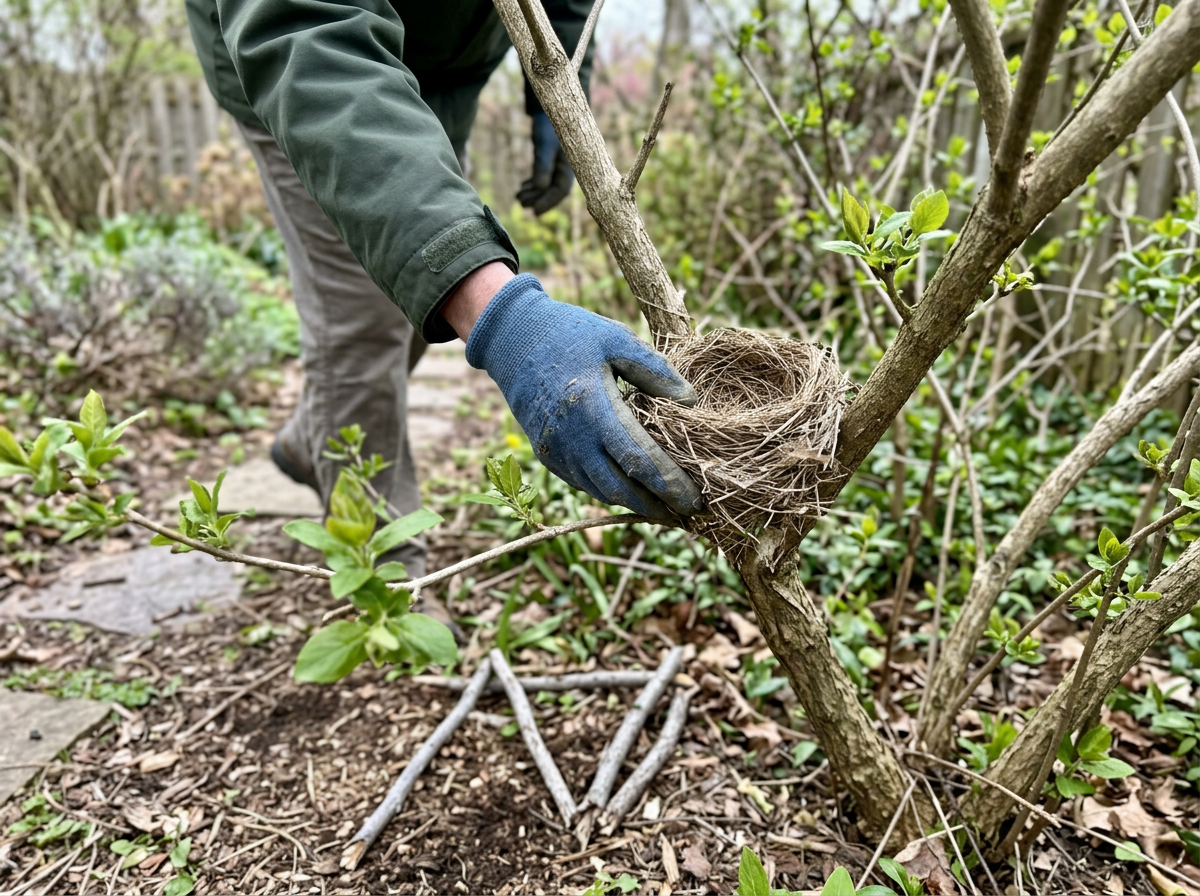
If the nest has been moved or disturbed and it was active, the clock matters. Here's what to do immediately.
- Put it back as close to the original location as possible, right now. If the nest structure is intact and you know exactly where it was, replace it. Use the same branch fork, the same ledge, the same spot. This is your single best shot at parental return.
- If the nest fell or was knocked to the ground, place it in a small container (a berry basket or margarine tub with drainage holes works) and attach it to the nearest branch at roughly the same height. Don't try to reconstruct it from scratch.
- Step back immediately and give the parents at least one to two hours to return. Don't hover. Don't check repeatedly. Every additional disturbance makes abandonment more likely.
- If chicks fell out and are on the ground, pick them up gently (bare hands are fine, the myth that human scent causes abandonment is false) and place them back in the nest.
- If chicks are visibly injured, hypothermic (cold and limp), or the parents have not returned in two or more hours, contact a licensed wildlife rehabilitator immediately. Find your nearest one through the National Wildlife Rehabilitators Association directory or your state wildlife agency.
Do not keep chicks indoors as a substitute for finding help. Do not attempt to feed them. Do not place the nest near a heat lamp unless directed by a rehabilitator. These well-intentioned actions often cause more harm than the original disturbance.
The legal and ethical picture
In the United States, the Migratory Bird Treaty Act (MBTA) makes it illegal to take, disturb, or destroy an active nest belonging to a migratory bird species without a valid federal permit. "Take" in this context includes moving or relocating a nest that contains eggs or live young. The USFWS is direct about this: it is generally illegal to destroy a nest that has eggs or chicks in it. Moving such a nest without authorization puts you on the wrong side of federal law.
There are a small number of narrow exceptions. The USFWS does allow prompt removal of migratory birds, nests, eggs, and nestlings from the interior of structures (inside buildings) without a permit in some cases. Outside of that narrow carve-out, homeowner-level relocation of active nests is not broadly permitted. If you genuinely need a nest moved for construction, utility, or safety reasons, the USFWS can issue permits under very limited circumstances, but this is not a DIY process.
For empty nests with no eggs or live birds, the MBTA does not prohibit destruction or removal, as long as no birds or eggs are present. The USFWS is explicit that the Act does not contain a prohibition on destroying a nest alone, without eggs or birds in it. That said, if you're not certain the nest is empty, you need to confirm it before acting.
In Canada, the Migratory Birds Regulations 2022 (MBR 2022) shifted protection so that most nests are protected only when they contain a live bird or viable egg, with exceptions for certain Schedule 1 species that retain year-round nest protection. Canada's framework also includes a relocation permit process (Section 71 of MBR 2022) for situations where moving a nest is genuinely necessary.
Beyond legality, there's the practical reality that Audubon researchers and wildlife professionals consistently point out: it's very difficult to tell a protected sparrow nest from a protected warbler nest without expertise. The safest and most ethical approach is always to leave active nests alone and consult a professional before taking action.
Smarter alternatives to moving a nest
In most situations where someone wants to move a nest, the underlying problem (a nest in an inconvenient location, a safety concern, or a pest issue) can be addressed without touching the nest at all. Here are practical approaches that work.
Wait it out
Most songbird nests go from egg-laying to fledging in three to five weeks total. If a nest is on your porch, in your garage eave, or above a doorway, delaying any work for a few weeks is almost always the simplest solution. Mark the date you first noticed the nest, count forward four to five weeks as a conservative estimate, and then check from a distance before doing anything. If you need a practical guide on timing, that's covered in more detail in articles specifically about when and how to move a bird nest, including where to move a bird nest with eggs.
Exclusion without trapping
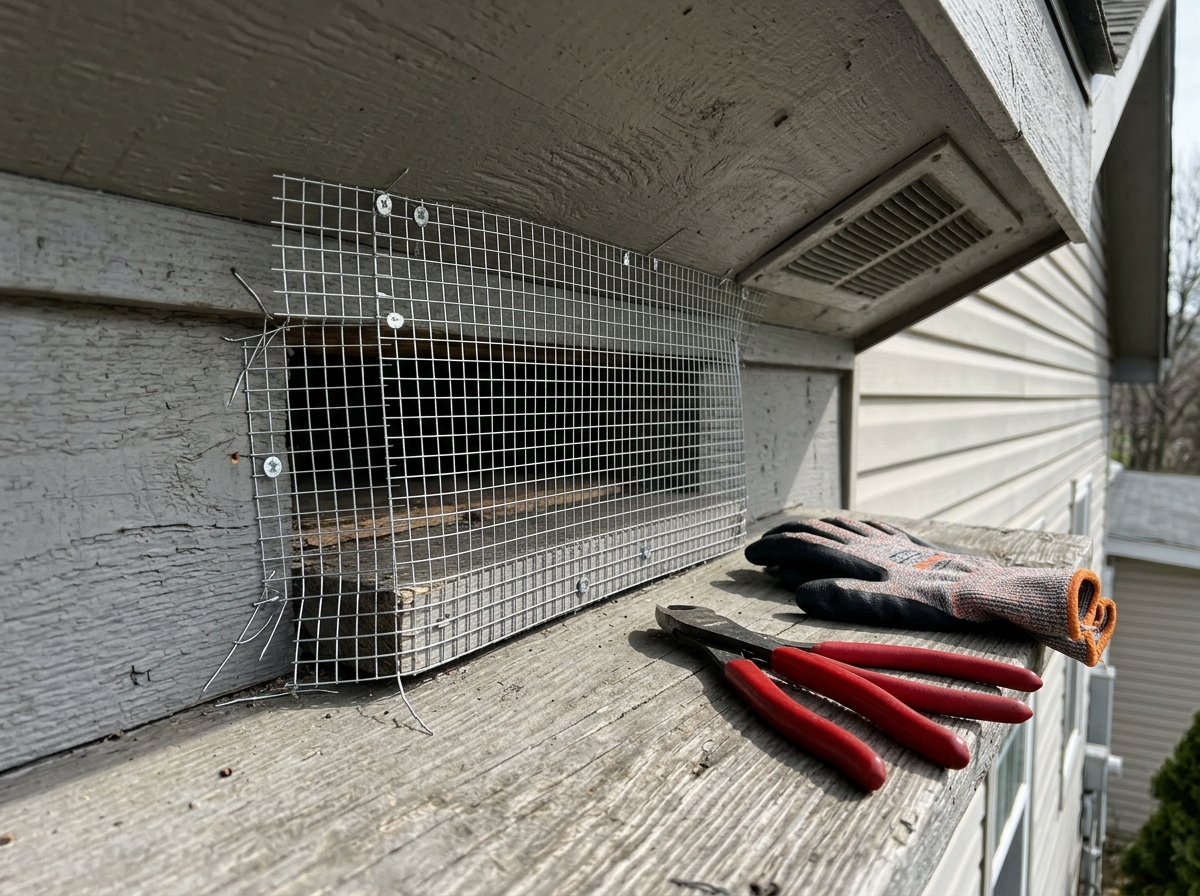
If you need to prevent birds from accessing a specific spot (an open pipe, a vent, a gap in a structure) to stop future nesting, use physical exclusion like hardware cloth, vent covers, or bird netting. Critical rule: never install exclusion while a nest is active. You risk trapping adults inside or blocking them from chicks. Wait until you've confirmed fledging is complete and the nest is empty, then seal the entry point.
Deterrence that doesn't harm
For areas where you don't want future nesting (a specific ledge, a boat hull cover, a rarely used doorway), non-harmful deterrents can discourage nest building if applied before birds start. Reflective tape, physical ledge spikes on inaccessible architectural features, and commercial bird gels (applied to landing surfaces before nesting season) can redirect birds without injuring them. These need to be in place before birds start scouting, so late winter (February or early March in most of the U.S.) is the right time.
Predator protection as an alternative to relocation
If the concern is that a nest is in a dangerous spot because of cats or other predators, the answer is usually predator management, not nest relocation. Keep cats indoors during nesting season. Place a physical baffle on any post or tree trunk below a nest. Reduce ground-level access to the area if possible. This approach keeps the nest where the parents built it, which is always better than moving it.
When and how to clean up after the birds leave
Once a brood has successfully fledged and you've confirmed the nest is empty and inactive, removal or cleanup is generally legal and straightforward for most species under U.S. law. Canada's guidelines similarly note that removing a nest after breeding season when it contains no migratory bird or viable egg has no effect on the birds' ability to nest again.
Here's how to confirm it's actually done and safe to act.
- Watch the nest site for at least two full days with no adult or chick activity before assuming it's fledged.
- Approach slowly and check the nest from a distance first. An empty, quiet nest with no fresh droppings around the rim is a good sign.
- Physically inspect only after you're confident. An empty nest will feel light, may be weather-beaten, and will have no warmth.
- Wear gloves during removal. Nests can carry mites, lice, and bacteria. Double-bag the material and dispose of it in an outdoor bin.
- Clean the surface where the nest sat with a diluted bleach solution (one part bleach to nine parts water) to remove any parasites and discourage reuse of the exact same spot.
- If you want to prevent nesting in that location next season, install your exclusion or deterrent now, not during nesting season.
One important note: some species, particularly colonial nesters like swallows and certain herons, may return to the same nesting territory year after year. Removing the nest after fledging doesn't prevent them from rebuilding. If you want to redirect them permanently, you'll need habitat modification or deterrents in place well before spring.
If you're unsure whether a nest site might be reused by a protected species or one with special status, a quick call to your state wildlife agency or a local Audubon chapter can save you a lot of trouble. Getting that confirmation before you act is always the right call.
FAQ
If I moved a nest already, will the birds still come back later if I put it back where it was?
Not reliably. Returning the nest to the original spot may help only if parents can quickly re-locate and the chicks have not overheated or chilled. The bigger risk is that adults may have abandoned the clutch after the initial disruption, so you should focus on getting help from a local wildlife rehabilitator rather than repeated moving.
How close do I need to get to check whether the nest is active?
Avoid close inspection. Use a viewing distance that does not cause adults to leave the area, and rely on cues like visible eggs or chicks in direct sight. If you cannot confirm without stressing the adults, treat it as active and contact your state wildlife agency.
What should I do if I find eggs or chicks on the ground after the nest was disturbed?
Do not put them back into the nest yourself. Instead, place the young in a safe, covered spot nearby only long enough to reduce exposure, then contact a wildlife rehabilitator. Returning chicks incorrectly can cause additional abandonment if the species is sensitive to human handling.
Can I relocate the nest at night to reduce the chance of abandonment?
No, it does not solve the core problems. The eggs and nestlings still experience temperature instability and the adults may still not re-find the exact location. Also, laws treat moving an active nest as disturbance regardless of time of day.
Does removing nesting material or “tidying” the area count as moving a bird nest?
It can. If the nest contains eggs or live young, altering it, removing it, or clearing nearby material can still be considered disturbance under protections for active nests. If you are unsure whether eggs or chicks are present, do not touch anything and confirm first.
Are all bird nests protected the same way in the U.S.?
No. In the U.S., many protections under the Migratory Bird Treaty Act apply to migratory bird species, and the key practical trigger is whether eggs or live young are present. Unprotected species or truly empty nests may be handled differently, but you need confirmation before acting if there is any chance it is active.
What if the nest is on a public utility pole or street tree?
Treat it as a higher-stakes situation and contact the utility or city tree service plus your wildlife agency. They typically have an approved process and may already know which nests on that site are protected, avoiding DIY relocation or cleanup.
How long should I wait after fledging before cleanup or exclusion is allowed?
Check from a distance for signs of continued parental feeding. A conservative approach is to wait until you confirm the chicks have fledged and adults are no longer returning, then give an additional buffer period before sealing entry points, because some species linger to feed fledglings nearby.
If my goal is to stop future nesting, can I install hardware cloth or vent covers immediately?
Only after the nest is confirmed empty. Installing exclusion while a nest is active can trap adults or interfere with feeding chicks. If the nest is active, use temporary, non-contact solutions (like rescheduling work) until fledging is complete.
What are good deterrents if the nest is in a spot like a boat, porch rail, or doorway?
Use deterrents that do not require touching the nest, such as repositioning landing areas, applying products to landing surfaces before nesting season, and adding barriers that prevent access to the exact ledge. For species that reuse the same site, deterrents must be in place before spring scouting starts.
Is it okay to remove a nest after breeding season if I can see it looks empty?
Only if you are confident there are no viable eggs or live birds. Some nests appear inactive but still contain eggs, or eggs can be laid and incubated quickly after you think a season has ended. If there is any uncertainty, get a confirmation call before cleanup.
Next Article
Can You Move Bird Nests With Hatchlings? What to Do
Learn if you can move a nest with hatchlings, what you can do safely now, and legal alternatives to protect birds.