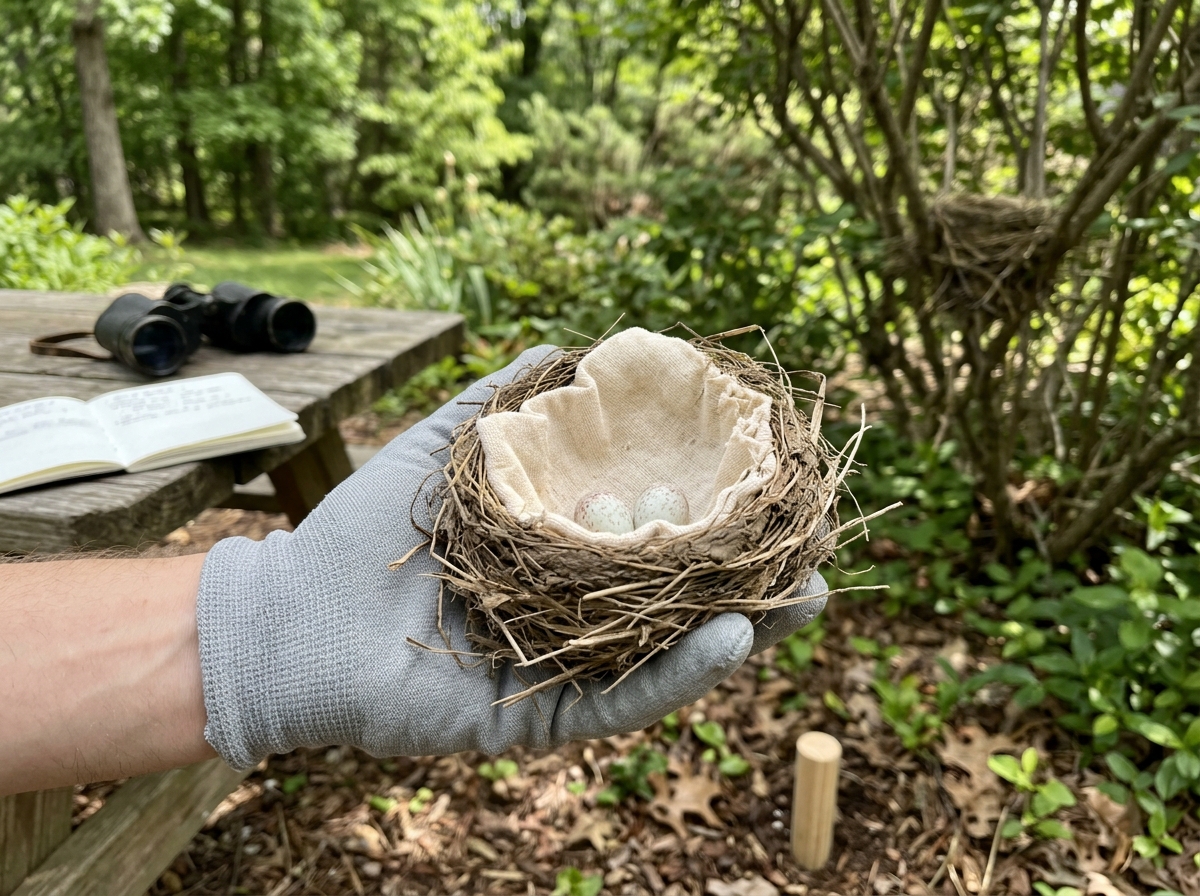
Yes, you can sometimes move a bird nest, but the short answer most people need to hear is: probably not legally, and almost certainly not safely, if the nest is active. Whether the nest contains eggs, hatchlings, or a sitting adult, the law in most countries treats it as a protected site the moment any bird is using it. Moving it without the right authorization can land you a serious fine or worse. That said, the situation isn't always black and white, and what you can do depends heavily on which country you're in, what stage the nest is at, and what the actual problem is. Let's work through it step by step.
Can You Move Bird Nests With Hatchlings? What to Do

Maya Bennett
22 Mar 2026
Quick answer: active nests vs. empty nests
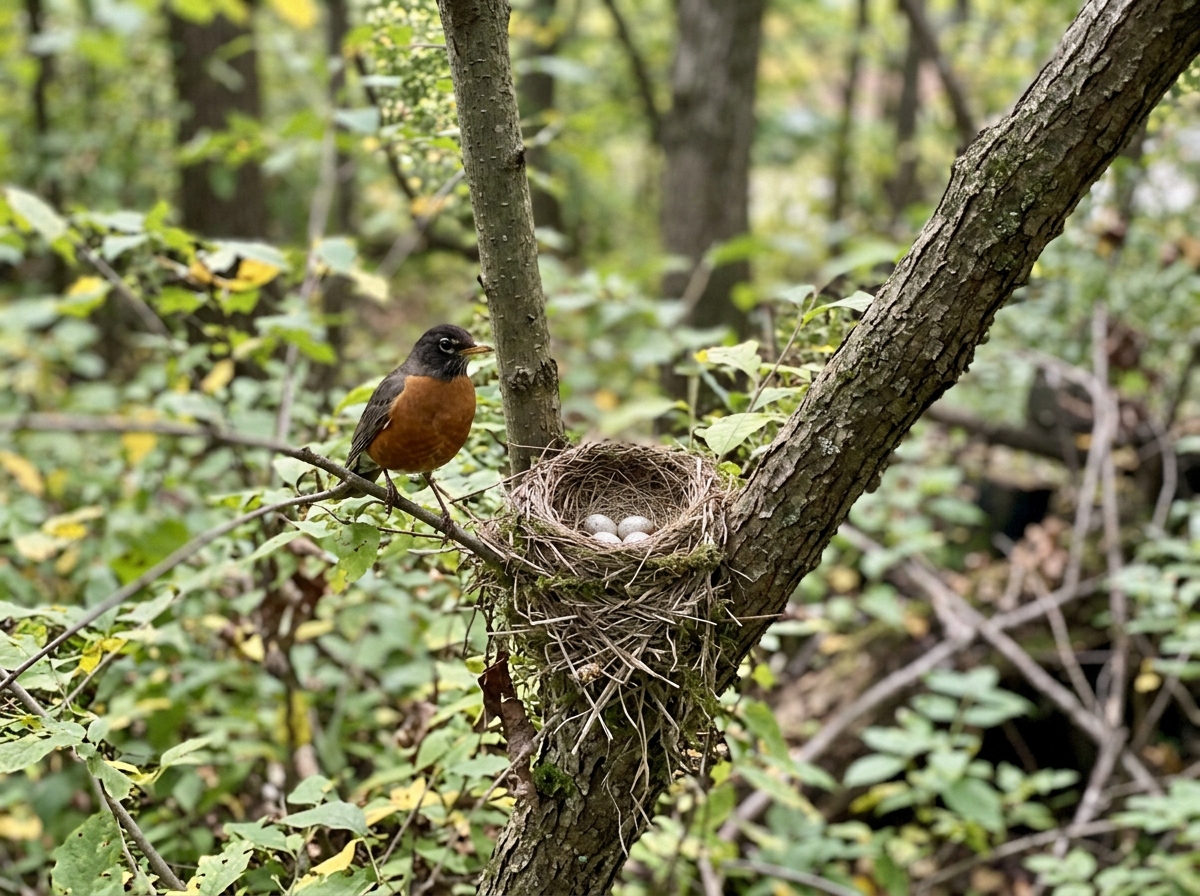
The single most important distinction is whether the nest is currently in use. An empty nest, one where breeding has fully finished and no bird or viable egg remains inside, sits in a much greyer legal zone and in many jurisdictions can be removed or relocated without a permit once the breeding season is over. An active nest, meaning one that contains eggs, hatchlings, or a parent bird that is incubating or brooding, is protected under federal or national wildlife law in the US, UK, Canada, and Australia, and moving it without authorization is illegal.
In the United States, the Migratory Bird Treaty Act (MBTA) makes it unlawful to 'take' a migratory bird, and that term specifically includes nests and eggs. The January 2025 MBPM-2 nest memorandum from the Department of the Interior confirms that relocating a nest containing birds, nestlings, or viable eggs requires proper regulatory authorization, which the general public does not have. In the UK, the Wildlife and Countryside Act 1981 protects all wild bird nests in use or being built, with penalties of up to six months' imprisonment and an unlimited fine per offence. Canada's Migratory Birds Regulations 2022 prohibit damaging, destroying, disturbing, or removing migratory bird nests when they contain a live bird or viable egg, and permits are available only for specific situations where waiting is not possible. Australia's federal framework under the EPBC Act takes a similar protective stance.
The practical takeaway: if the nest is empty and breeding is done, removal is usually fine and causes no harm to the birds. If the nest has anything living in it, If the nest has anything living in it, stop, assess, and read the rest of this guide before touching anything.
What changes when there are hatchlings in the nest
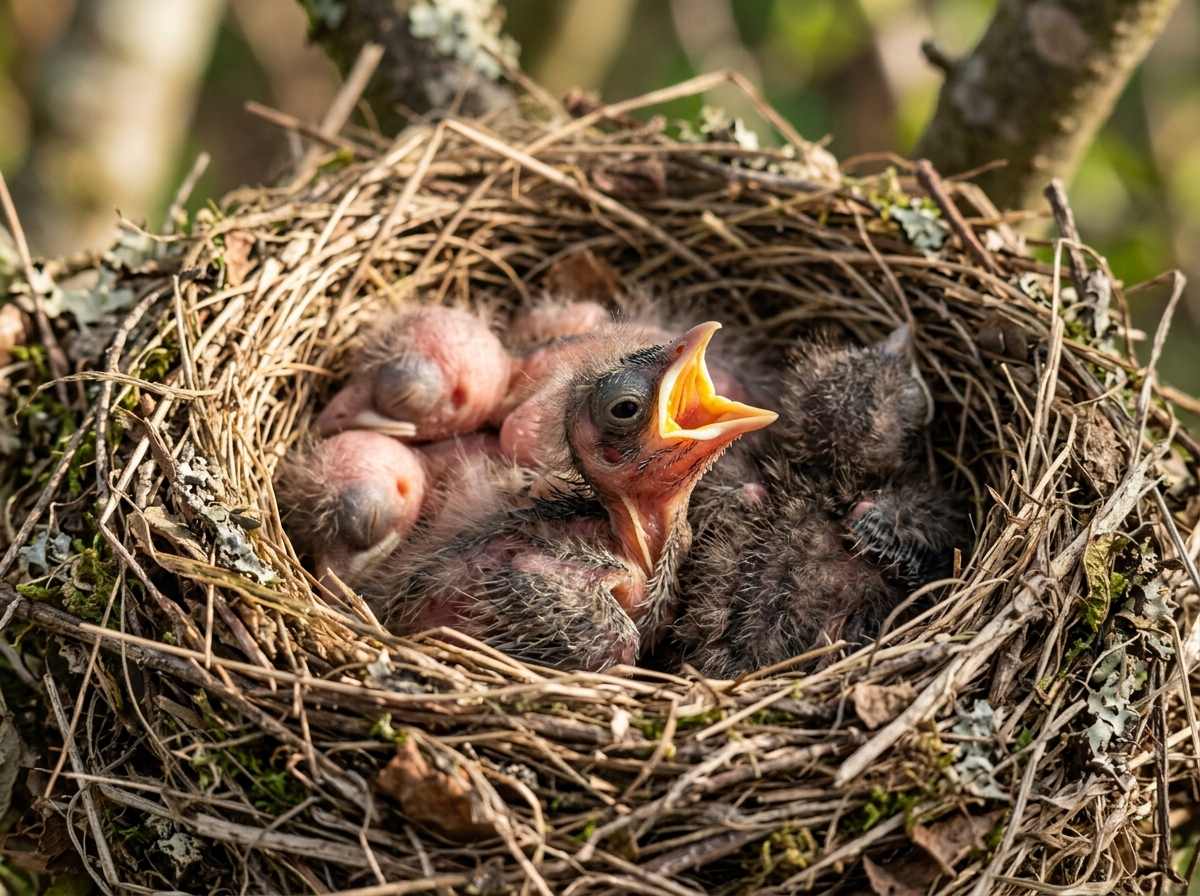
Hatchlings, those blind, featherless, or partially feathered nestlings that have just broken out of their eggs, are the most vulnerable stage of a bird's life. They can't regulate their own body temperature, they need to be fed every 20 to 30 minutes during daylight hours, and they are completely dependent on their parents finding them exactly where they were left. Moving a nest with hatchlings raises the stakes significantly compared to moving one with eggs.
The core risk is parental abandonment, although this is less common than people fear. Parent birds are strongly motivated to return to their young and will usually re-adopt a nest that has been moved only a very short distance (within a metre or two, in the same general location and at the same height). However, if the nest is moved somewhere the parents can't find it, or if handling causes enough stress, the adults may stop returning. For hatchlings, even a few missed feeding cycles can be fatal. This is why the recommendation from wildlife authorities is almost always to leave the nest exactly where it is unless there is an immediate and unavoidable safety threat.
From a legal standpoint, hatchlings are explicitly named in US and Canadian regulations as protected contents. The MBPM-2 memorandum specifically lists 'nestlings' alongside birds and viable eggs as protected under the MBTA. So if anything, the presence of hatchlings makes the legal bar for intervention higher, not lower. More detail on what to do in this specific situation is covered in a dedicated guide on moving a bird nest with eggs and hatchlings, but the short version here is: contact a licensed wildlife rehabilitator before you do anything.
How to tell if the nest is active and what stage it's in
Before you make any decision, spend five to ten minutes observing the nest from a comfortable distance, ideally 5 to 10 metres away, without approaching it directly. Use binoculars if you have them. Take a few photos on your phone. What you're looking for is signs of current use.
Signs the nest is active
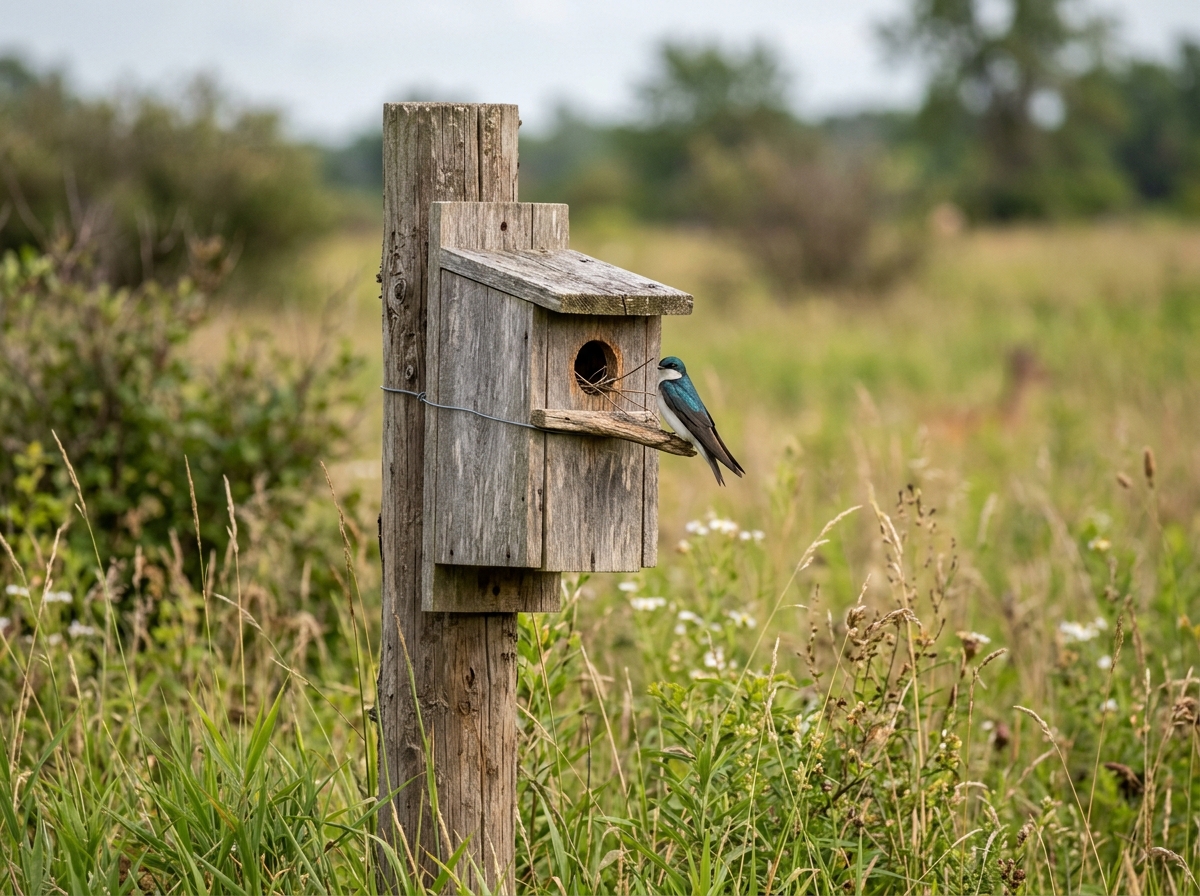
- An adult bird sitting in or very near the nest, especially if it flushes (flies away) when you approach and circles back repeatedly
- Visible eggs: smooth, often speckled or colored, sitting in the nest cup
- Hatchlings: small, often pink or gray, naked or downy, with disproportionately large heads and closed eyes at the very youngest stage
- Fecal sacs (small white gelatinous parcels) being carried away by parent birds, a reliable sign of active chick-rearing
- Parent birds arriving with food in their beaks on a regular basis
- Fresh plant material or feathers being added to the nest structure
Signs the nest is empty or abandoned
- No adult bird visits over a 2-hour observation window during daylight hours
- Nest material is weathered, matted, or collapsed
- No eggs or chicks visible and no feeding activity
- Nest has been in the same position with no changes for several weeks after the expected end of the local breeding season
If you're unsure about the species or the stage, try to note the nest's size, shape, and construction materials (mud, grass, twigs, moss, spider silk), as well as its location (tree fork, ledge, eaves, ground). These details will help a local wildlife rehabilitator or your national wildlife authority give you faster, more accurate advice. A photo shared by text or email is often enough for an expert to identify the species and advise you on next steps.
Legal and ethical rules: when moving is and isn't allowed
Here's how the rules break down by region. Note that local state, provincial, or municipal laws can add extra layers of protection on top of these federal frameworks, so this is a general guide, not legal advice.
| Country | Key Law | Moving an empty nest | Moving an active nest | Penalty (max) |
|---|---|---|---|---|
| United States | Migratory Bird Treaty Act (MBTA) | Generally permitted after breeding season | Illegal without federal authorization | Criminal fines; up to 6 months imprisonment per offence |
| United Kingdom | Wildlife & Countryside Act 1981 | Generally permitted once breeding ends | Illegal without a licence | Unlimited fine + up to 6 months imprisonment per offence |
| Canada | Migratory Birds Regulations 2022 | No restriction once nest is empty and season is over | Illegal without a permit; permits available in some cases | Significant fines under federal wildlife law |
| Australia | EPBC Act 1999 (federal) | Generally permitted when nest is empty | Restricted; specific approvals required | Substantial fines under EPBC Act |
The ethical line is just as clear as the legal one. Even when a nest is technically empty and you are legally free to remove it, consider whether birds might return to reuse or refurbish it in the next season. Many species, including bluebirds, swallows, and house sparrows, are opportunistic reusers of old nests. If the nest is in a spot that doesn't cause you a real problem, leaving it in place costs you nothing and may save a pair of birds several days of nest-building effort next spring.
When movement is legally allowed for active nests, it is almost always via a permit or licence system, and that permit is granted to licensed professionals, pest control operators, or authorized researchers, not to individual homeowners acting on their own. If you believe your situation might qualify (for example, a nest built in a location posing a genuine safety hazard to people), the process involves contacting the relevant authority, which is explained below.
What you can safely do right now instead of moving it

In most cases, the best thing you can do today is modify the situation around the nest rather than the nest itself. This protects the birds, keeps you on the right side of the law, and resolves most homeowner concerns without any handling at all.
- Mark the area clearly: If the nest is in a path, on a door ledge, or near a work area, mark a 1 to 2 metre exclusion zone with string or cones so people don't accidentally disturb it.
- Pause any planned work: If you were about to prune a tree, replace gutters, or paint the eaves, stop and reschedule for after the nesting cycle ends. Most songbird nesting cycles run 2 to 6 weeks from egg-laying to fledging.
- Reduce foot traffic and noise: Route people away from the immediate area. Loud vibrations and frequent close approaches stress parent birds and can cause them to abandon the nest.
- Block access to the nest area for pets: If a cat or dog can reach the nest, put up a temporary barrier (a stretch of garden fencing or an upturned laundry basket, for example) at least 2 metres from the nest.
- Don't add food or water near the nest: It seems helpful but it attracts other animals, including predators, to the exact spot you're trying to protect.
- Take a photo and note the date: This helps you track the nesting cycle and gives you useful information if you later need to consult a wildlife authority.
These steps handle the vast majority of situations where someone wants to move a nest but doesn't actually need to. The nest being inconveniently placed is annoying; it is rarely an emergency. If you genuinely can't wait, the next section explains who to call.
If relocation really is necessary: who to contact and what to expect
If the nest is in a location that poses an immediate and unavoidable safety risk (think a nest built directly over an electrical panel that is arcing, or inside a vehicle that cannot be taken off the road), then you need to contact the appropriate authority before touching anything. Here is who to call depending on where you are.
United States
Contact the US Fish and Wildlife Service (USFWS) regional office for your state, or reach out to a licensed wildlife rehabilitator. The USFWS can advise on whether your situation qualifies for an exemption or depredation permit under the MBTA. Wildlife rehabilitators are licensed to handle birds and may be able to take in hatchlings if the nest must be disturbed. You can find your nearest rehabilitator through the National Wildlife Rehabilitators Association (NWRA) or the Wildlife Center of Virginia's directory.
United Kingdom
Call the RSPCA (England and Wales), SSPCA (Scotland), or USPCA (Northern Ireland) for immediate guidance. Natural England issues licences for disturbance of nesting birds in England; the equivalent bodies are NatureScot in Scotland and Natural Resources Wales. In genuine emergency situations, the RSPCA will advise on the safest course of action and can refer you to the correct licensing pathway if one applies.
Canada
Contact Environment and Climate Change Canada (ECCC), which administers the Migratory Birds Regulations. Canada's guidance explicitly states that if you can't wait and need to destroy or relocate a nest containing a live bird or viable egg, a permit may be available. Contact your regional ECCC wildlife office to start that process. Local wildlife rehabilitators can also assist with hatchlings if they need to be temporarily removed.
Australia
Contact your state or territory environment department first, as wildlife licensing in Australia operates primarily at the state level even under the broader federal EPBC framework. WIRES (NSW), Wildlife Victoria, and similar organizations in each state can provide immediate guidance and connect you with licensed carers if hatchlings are involved.
When you make contact, be ready to describe the species (or your best guess), the nest contents (eggs, hatchlings, or adults), the exact location and the nature of the hazard. The more specific you are, the faster they can help. In most non-emergency situations, the advice will be to wait out the nesting cycle, which is typically 2 to 6 weeks for most common garden species.
Protecting the nest where it is: practical prevention tips
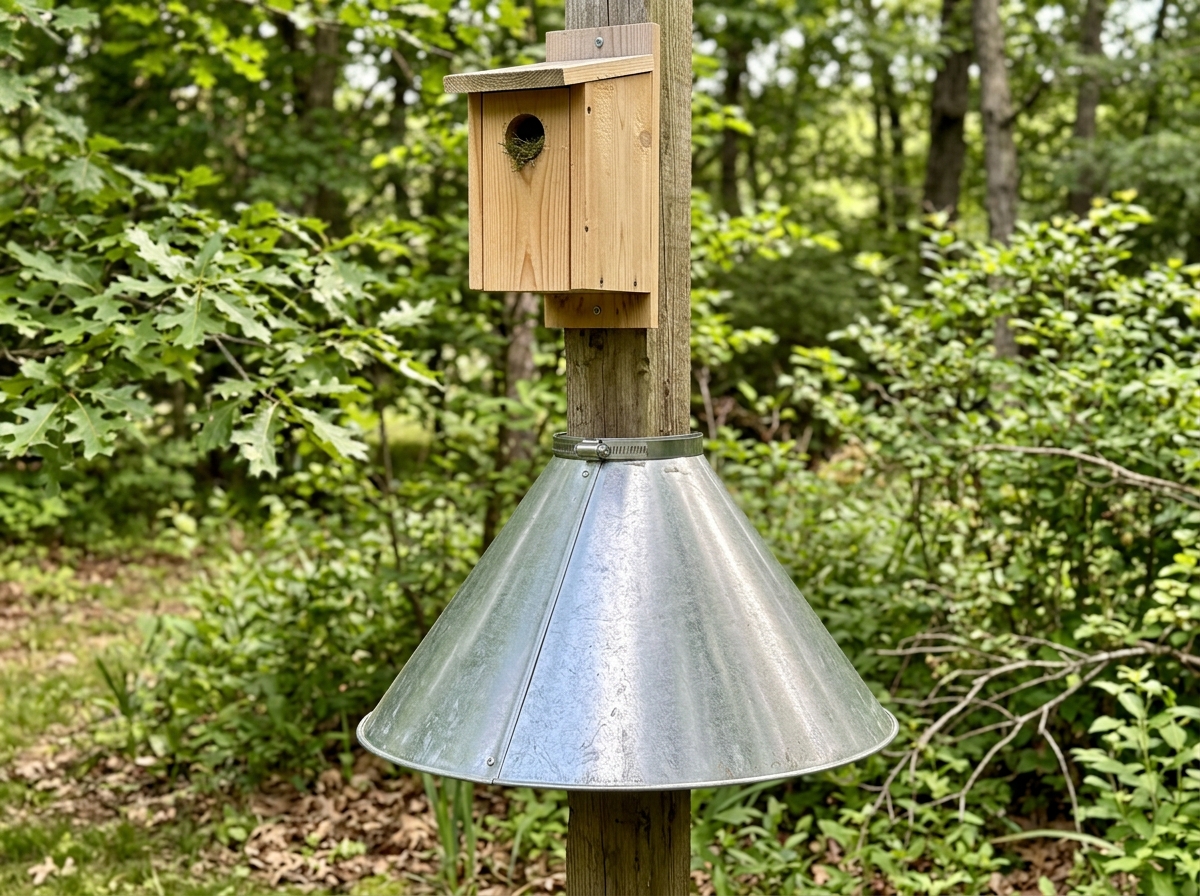
If you've decided (or been advised) to leave the nest in place, there are several things you can do to improve its chances of success. Think of yourself as the nest's temporary steward.
- Install a predator guard: If the nest is in a nestbox or on a post, a baffle (a cone or cylinder of smooth material below the box) makes it much harder for squirrels, raccoons, or cats to reach the nest. These are inexpensive and easy to fit.
- Reduce reflective or noisy surfaces nearby: Bright reflective tape, wind chimes, and similar deterrents near the nest can stress the birds. Keep the immediate area calm.
- Check for structural risks: If the branch or ledge holding the nest looks unstable, speak to a wildlife authority before doing anything. In some cases, a licensed professional can add a small support bracket without disturbing the nest.
- Keep your own visits minimal and brief: Every time you check on the nest, you're potentially giving a predator a cue to look in that direction. Once a day from a distance is more than enough.
- Let fledglings go: Once chicks start hopping out of the nest (fledgling stage), they're supposed to be on the ground. This is normal. They are still being fed by their parents and will be flying within a day or two. Don't scoop them up unless they are visibly injured.
The best long-term prevention for awkwardly placed nests is to address the attractive feature before the next breeding season. If birds keep nesting above your front door, consider installing a physical deterrent (like angled plastic sheeting or bird spikes) in late winter, well before nest-building begins. Doing it while a nest is present is illegal if the nest is in use; doing it in January or February is perfectly fine and saves you this exact dilemma next year.
For more detail on specific scenarios, including the exact steps to relocate an empty nest safely, For more detail on specific scenarios, including the exact steps to relocate an empty nest safely, the legal question of whether moving a bird nest is illegal in your jurisdiction, and where to position a relocated nest with eggs for the best chance of parental return, those topics are covered in dedicated guides on this site., and where to position a relocated nest with eggs for the best chance of parental return, those topics are covered in dedicated guides on this site. But for today, the core answer remains the same: if anything is living in that nest, leave it alone, protect the area around it, and call a professional if you genuinely can't wait.
FAQ
How can I tell if a nest is active without getting close to it?
Look from a distance for repeated adult visits (for example, birds returning every few minutes), fresh nesting material added or repaired, droppings near the site, or visible eggs or nestlings. If you see adults coming and going, assume it is active and do not touch it, even if you never see hatchlings directly.
If the nest has eggs but they seem abandoned, can I move it?
Do not rely on “it looks like they are not being fed” as proof of abandonment. Many species have feeding schedules that vary by time of day and weather. If any egg or parent is present, treat it as active, and contact a licensed wildlife rehabilitator or the relevant authority to confirm whether intervention is permitted.
Can I relocate the nest a short distance to help with a safety hazard like a door or pathway?
Short-distance relocation is sometimes mentioned for briefly moved nests, but it still requires legal authorization when eggs, hatchlings, or an incubating adult are involved. For common homeowner scenarios, the safer route is to create a barrier that keeps people and pets away, then address the hazard after the nesting cycle.
What if the nest is in my shed or inside a mailbox, and I need access right now?
Access needs are common, but they are usually not considered “unavoidable” unless there is immediate danger (for example, imminent collapse, active electrical/heat risk, or the structure being about to be moved). In that case, call the appropriate authority or a rehabilitator first, ask about temporary measures, and avoid closing in on the nest to “force” the birds to leave.
Are there situations where I can legally remove an empty nest that birds might reuse soon?
Sometimes yes, but it depends on whether breeding has truly finished and whether viable eggs or a reusing pattern are plausible. If the nest is recently built, warm-looking, has fresh material added, or the species is an opportunistic reuser, wait and confirm with an expert. In practice, leaving the structure in place can be lower risk ethically and legally.
Will touching the nest once to check it cause abandonment?
It can. Handling can increase stress and interrupt the adults’ ability or willingness to resume brooding. If you must check, do it only visually from a distance using binoculars or photos, then stop. If you already touched it, contact a rehabilitator promptly to discuss whether any recovery steps are needed.
Can I move hatchlings directly or place them into a different nest myself?
In most jurisdictions, relocating hatchlings without authorization is not appropriate and can worsen survival odds. Hatchlings are dependent on very specific feeding and temperature conditions, and even experts usually focus on minimizing disturbance rather than DIY transfers. The practical next step is to call a licensed rehabilitator for instructions and, if needed, temporary intake.
What should I do if a nest falls or hatchlings hit the ground?
Treat it as an urgent wildlife care situation. Keep pets and people away, do not try to “fix” the nest by moving it around repeatedly, and call a rehabilitator. If advised and the hatchlings are not harmed, the safest option is often to place them back in the same general spot or a nearby position, but follow expert guidance because rules and techniques vary by species.
Do deterrents like spikes or netting count as “moving the nest,” and can I install them right away?
Deterrents are still a form of disturbance if the nest is currently in use. If there are eggs or nestlings, installing deterrents can be illegal and can trigger abandonment. If the nest is inactive and confirmed empty, deterrents can be set up, ideally before the next breeding season.
How long should I wait before assuming I can remove the nest?
Waiting is the default, but the right timing depends on the species and your local season length. Many backyard species take roughly 2 to 6 weeks, then require extra time to confirm no new nesting is underway. A practical approach is to wait until you have multiple days of no adult activity and no eggs or nestlings, then re-check before removal.
If I get permission or a permit, who should actually do the work?
Even when permits are available, they are typically intended for licensed professionals, authorized researchers, or pest control operators working under specific conditions. If you are granted authorization directly, follow the permit conditions exactly, including how and where the nest may be relocated and how to reduce disturbance during the process.
Next Article
Where to Move a Bird Nest With Eggs: Safe Steps
Where to relocate a nest with eggs and what to do now, with legal-safe steps, timing, site setup, and monitoring.