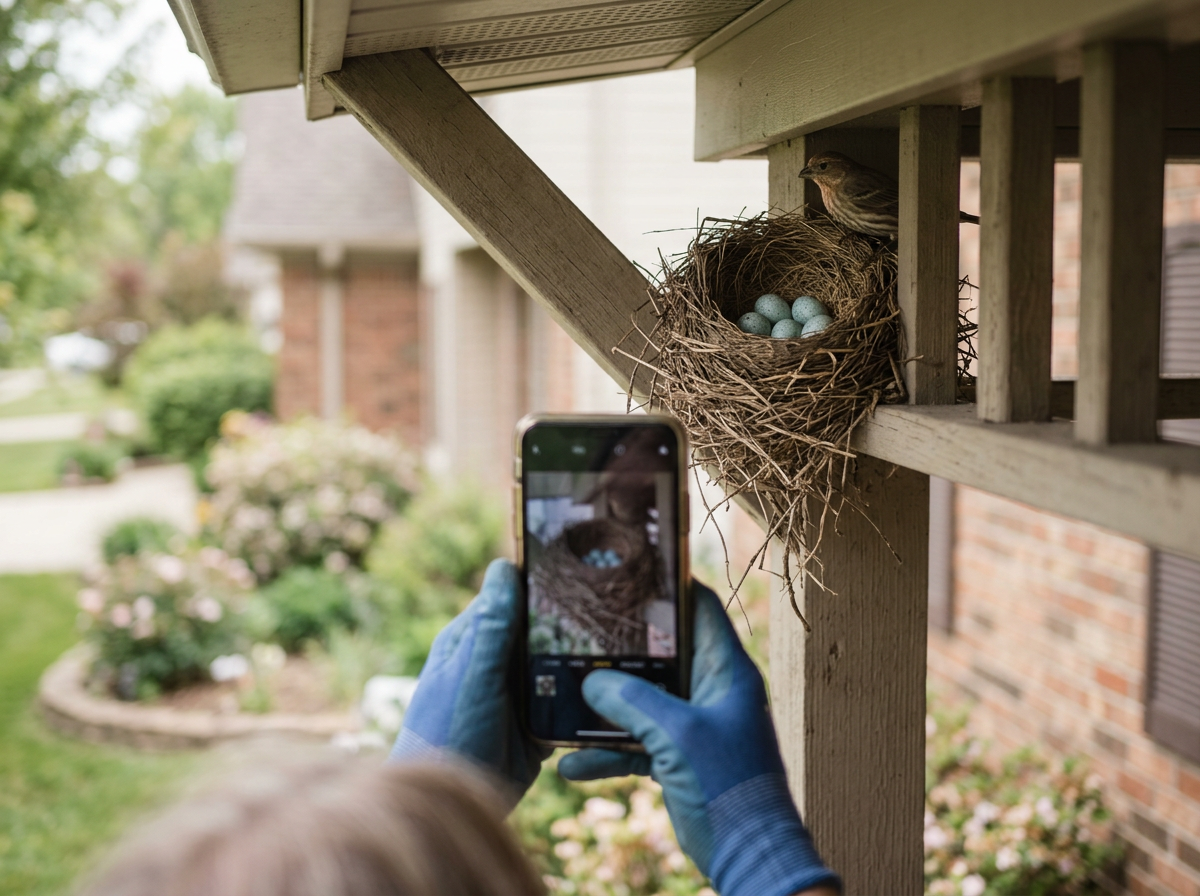
Moving a bird nest is something most people want to do quickly and without drama, but the honest answer is: Moving a bird nest is something most people want to do quickly and without drama, but the honest answer is: you may not be legally allowed to do it yourself. what happens if you move a bird nest Whether you can move a nest, how you do it, and where you put it depend almost entirely on what's in it right now. Let me walk you through the whole decision from the top, so you can act correctly today.
How to Move a Bird Nest: Safe Steps and Where to Relocate

Maya Bennett
22 Mar 2026
Is it legal to move a bird nest? Start here
In the United States, the Migratory Bird Treaty Act (MBTA) makes it illegal to 'take' migratory birds, which includes destroying or removing an active nest. An active nest is one that contains eggs or live nestlings. Under 50 CFR § 21.12, any relocation of an active nest that involves disturbing the eggs or young is treated as a take and generally requires federal authorization. That means a DIY move of an occupied nest is not a gray area: it's a federal violation unless you have a permit or are working with a federally permitted migratory bird rehabilitator. Fines can be significant, and the legal risk is real. can you move a bird nest with eggs
The practical rule is this: if the nest has eggs or chicks in it, stop. Don't move it yourself. Call a licensed wildlife rehabilitator or contact your regional USFWS Migratory Bird Permit Office. If you're in a state like Florida, FWC explicitly recommends contacting USFWS to determine what federal authorization is needed before touching anything. The permit process exists because even well-intentioned moves often result in abandonment or nest failure, and the law reflects that.
The situation is meaningfully different when a nest is empty and inactive. An abandoned or completed nest (no eggs, no birds present, breeding season over) is not protected under the MBTA's take provisions in most practical circumstances. You can generally remove or relocate an inactive nest without a permit, though state rules vary, so it's worth a quick check. The guidance below covers both scenarios, but be honest with yourself about what you're actually looking at before you touch anything.
Quick ID: what kind of nest is this, and how active is it?
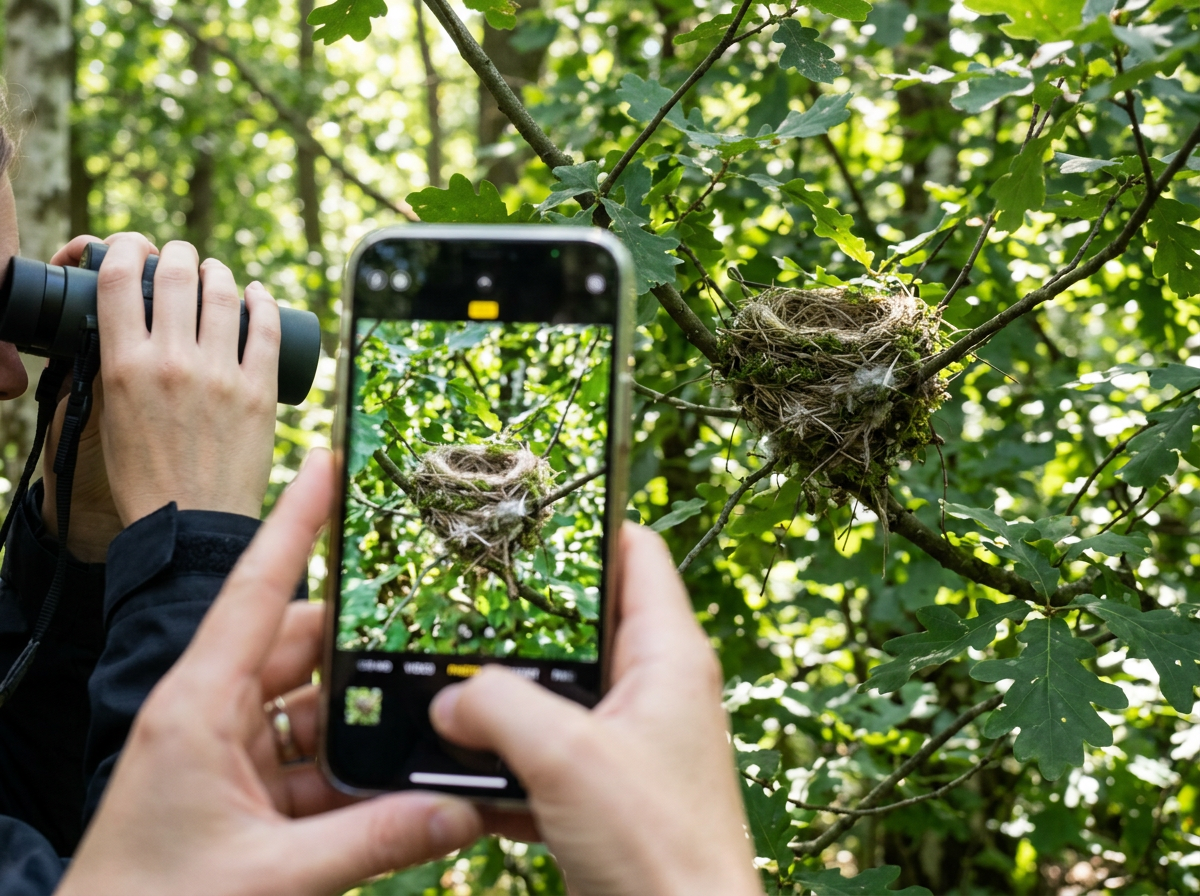
Before you do anything else, take a close-up photo of the nest from a safe distance without disturbing it. This gives you a reference and may help a rehabilitator or wildlife officer identify the species quickly if you need to call for help. Here are the key things to look for:
- Size and shape: Cup nests (roughly 2 to 4 inches across) are typical of songbirds like robins, sparrows, and finches. Larger, bulkier platform nests often belong to raptors or corvids. Mud-reinforced cups are characteristic of American Robins and Barn Swallows.
- Materials: Grass, plant fibers, and rootlets suggest common passerine species. Mud lining points to robins or swallows. Sticks and bark strips are common in larger thrushes or jays. Repurposed materials like string or plastic confirm a human-adapted species.
- Location: Eaves and rafters often mean House Sparrows or Barn Swallows. Shrub interiors at 2 to 5 feet off the ground are common for Northern Cardinals and Song Sparrows. High tree canopy nests are more likely raptors or crows.
- Eggs: Note color, size, and number. Robin eggs are a distinct sky blue. Speckled brownish eggs in a small cup suggest wrens or sparrows. Three or fewer large eggs in a bulky stick nest suggest raptors.
- Nestling age: Hatchlings are naked and helpless. Nestlings develop pinfeathers (dark quills) around days 5 to 7. Fully feathered fledglings may be on or near the nest but are close to leaving on their own. Age matters because a nest a week from fledging is a much better candidate for working around than relocating.
You don't need a perfect species ID to act responsibly. What you need to know is: (1) is it active right now, and (2) how far along is it? A nest with fresh eggs is weeks from resolution. A nest with large, feathered fledglings may be only days away from being vacated naturally. That timeline changes everything.
Move it or leave it alone? Making the right call
This is where most people get stuck. The temptation is to move the nest the moment it becomes an inconvenience, but the right question is whether the inconvenience actually justifies the disruption. Let's be direct about when you should not attempt a move versus when relocation is a real, viable option.
Do not move the nest if:
- The nest contains eggs or nestlings and belongs to any migratory bird species (which covers the vast majority of North American songbirds, raptors, and shorebirds).
- You cannot identify the species and the nest appears active. Assuming it's unprotected is not a legal defense.
- You're more than a few feet away from where the nest currently sits, because parental success rates drop sharply with distance.
- The only reason to move it is aesthetics or mild inconvenience. Birds abandon nests under stress, and an abandoned nest with eggs is a failed brood.
- The nest is a raptor nest (hawk, owl, osprey) or belongs to colonial waterbirds. These species have additional layers of federal and state protection.
Moving is viable when:
- The nest is completely empty and inactive (no eggs, no birds, breeding season has ended for that species in your region).
- The nest is in an immediately dangerous position: a structure is being actively demolished, a vehicle is about to be operated, or there is an acute safety risk to humans or the birds themselves.
- You have confirmed with a licensed rehabilitator or USFWS that relocation is authorized in your specific situation.
- The nest is being built (no eggs yet) and is in a genuinely hazardous location. Even then, birds may abandon a partially built nest that is moved, so weigh this carefully.
- A professional or permitted wildlife agent is doing the move, not you.
The most practical and conservation-friendly answer for an active nest in an inconvenient spot is usually: work around it. Delay the project, rope off the area, put a sign up for workers, cover the space below with a tarp to catch waste. Most songbird nests wrap up in 4 to 6 weeks from first egg to fledging. That's the real timeline you're dealing with.
How to move a bird nest: step-by-step
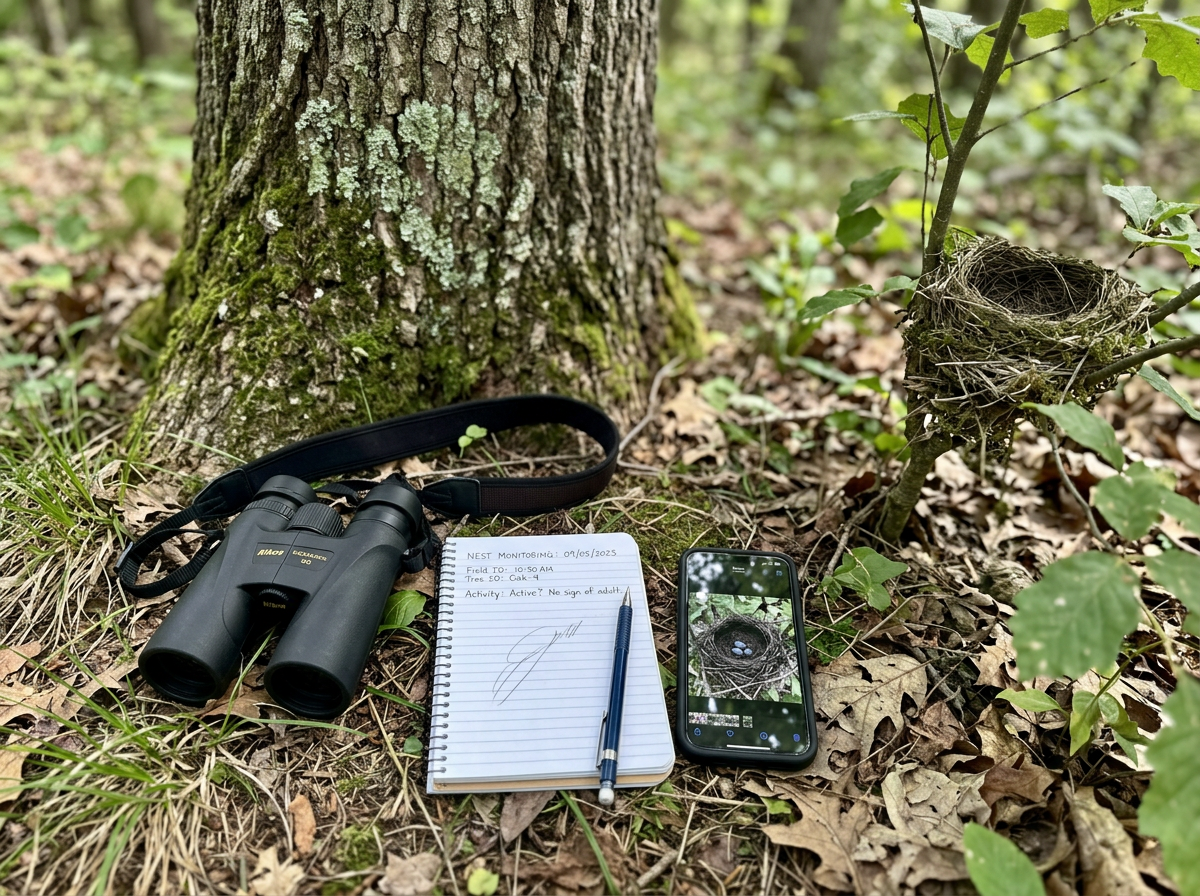
The following steps apply to the legally permissible scenarios: an empty/inactive nest, a nest being moved by or under the direct guidance of a licensed professional, or a nest in a situation where you have confirmed authorization. If you have an active nest with eggs or nestlings, skip to the section on who to call.
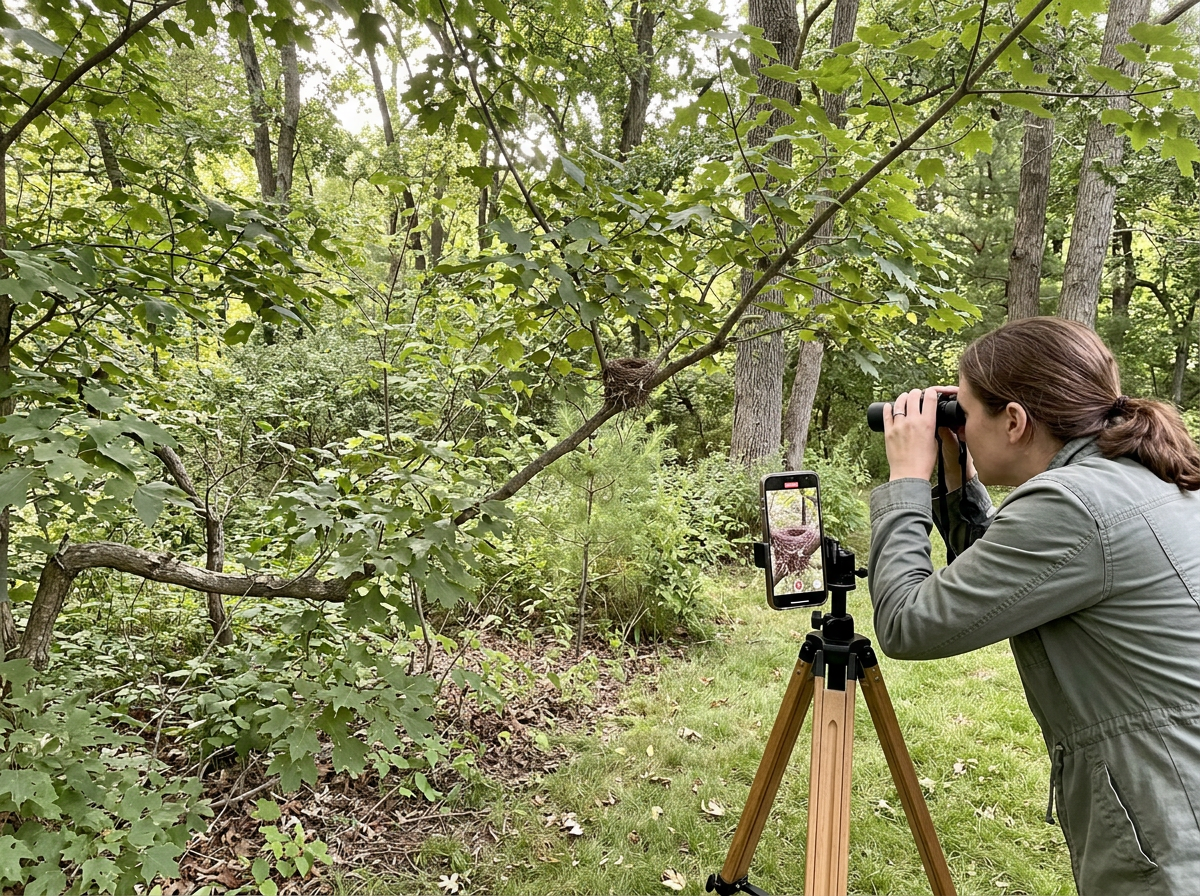
- Confirm the nest status before touching it. Look carefully (ideally with binoculars or a camera on a pole) for eggs, nestlings, or adult birds returning. If adults are present, stand well back and watch for 30 minutes before concluding the nest is inactive.
- Gather your materials. You'll need clean, unpowdered disposable gloves, a small cardboard box or open container padded with a clean cloth, and the new support structure you'll attach the nest to (a small shallow basket or wire cradle works well).
- Prepare the relocation site first. Know exactly where the nest is going before you pick it up. The new location should already be set up and ready to receive the nest. Never hold a nest mid-air while you figure out placement.
- Lift the nest gently with both hands, cradling the entire base. Do not tilt it or compress the sides. If the nest is attached with mud or fibers, use a flat tool (like a putty knife) to carefully free the base without deforming the cup.
- Carry the nest level and steady. Move slowly, minimize vibration, and place it directly into the prepared new support. Don't set it down on a surface and slide it; lower it straight in.
- Secure the nest in the new spot. If the nest was in a cup or basket, gently press it into position. If you're attaching it to a branch, use soft ties or wire to anchor the support structure to the branch without crushing the nest itself.
- Step away immediately and observe from a distance. Give the area 30 to 60 minutes of quiet before checking again. If adults were already using the nest, watch to see whether they return to the new location.
One practical note on gloves: the old folk wisdom that birds will abandon a nest because of human scent is largely not supported by research. Most birds have a limited sense of smell and will not reject eggs or nestlings because a person touched the nest. That said, gloves are still worth using to reduce stress-related disturbance and to protect yourself, since nests can harbor mites, lice, and other parasites.
Choosing the right relocation spot
Where you put the nest matters as much as how you move it. The single most important rule is distance: keep the relocation spot within 10 to 15 feet of the original location whenever possible. Adult birds return to a very specific point in space. Moving a nest more than a few feet in any direction can mean the parents simply cannot find it. If you’re trying to figure out where to move a bird nest with eggs, distance is the key rule. Within 10 feet is the target. Beyond 30 feet is likely too far for most species.
Height and microclimate
Try to match the original height as closely as possible. If the nest was at 5 feet, don't place the new spot at 12 feet. The same logic applies to sun exposure and shelter: if the original nest was shaded by a leaf canopy in the afternoon, find a spot with similar shade at the new location. Overheating is a leading cause of egg failure, so southern or western exposure in hot climates is a real risk if the birds chose a shaded spot originally.
Support structure
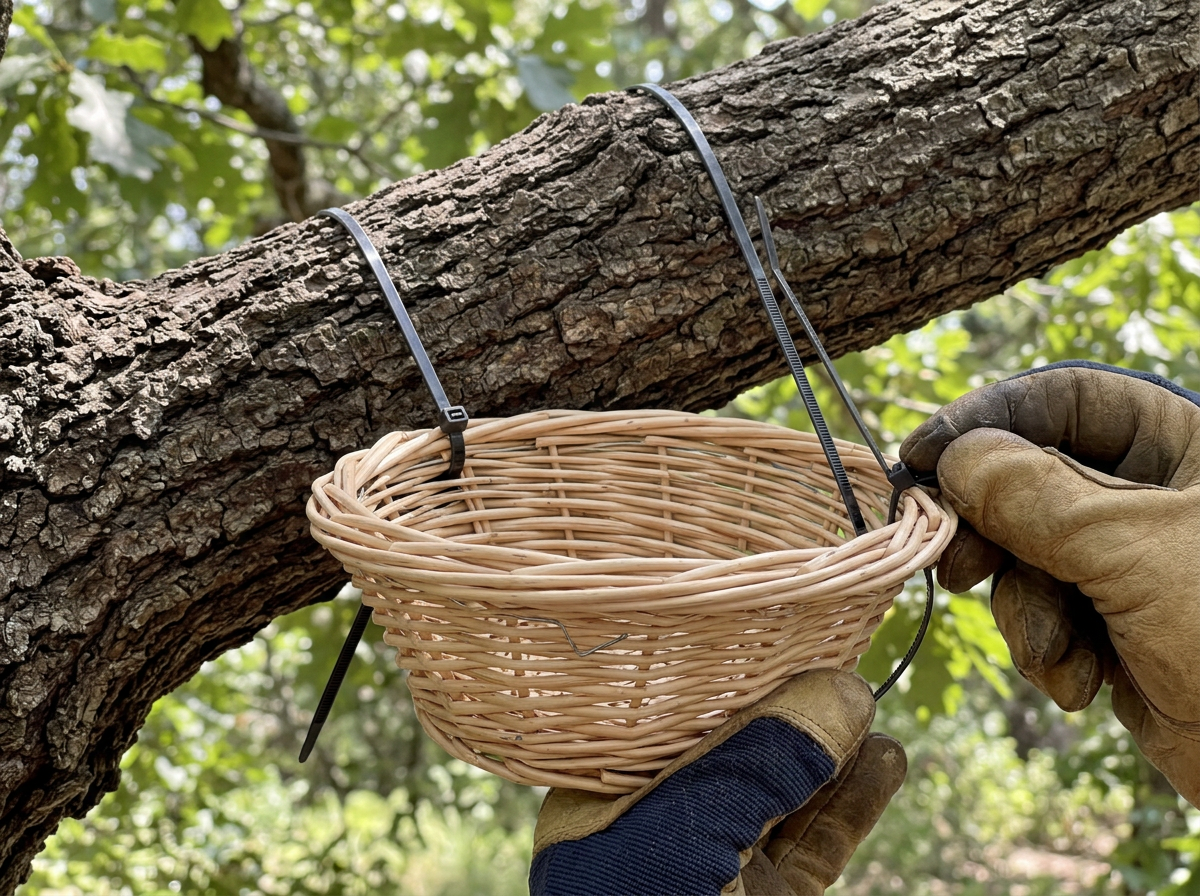
The nest needs a stable, level platform. A small wicker or wire basket (roughly the diameter of the nest or slightly larger) zip-tied or wired to a branch is reliable. You want the nest to sit naturally in the basket without being squeezed or tipped. If the nest was originally in a fork of a branch, you can recreate that geometry by choosing a similar fork nearby and bracing the nest with the basket.
Predator exposure
Avoid open, exposed spots where the nest is clearly visible from above or from all sides. Ideal placements have some foliage cover overhead and at least partial concealment from the sides. Don't place the nest directly against a wall or fence where cats or raccoons can reach it easily. A branch that requires an approach from above (not from a connected trunk or fence) is better for reducing mammalian predation.
| Placement Factor | Ideal | Avoid |
|---|---|---|
| Distance from original | Within 10 to 15 feet | More than 30 feet away |
| Height | Match original height within 1 to 2 feet | Major height changes up or down |
| Sun/shade | Match original microclimate | Full south or west exposure in hot climates |
| Stability | Secured basket on a solid branch fork | Loose or swinging placement |
| Concealment | Partial foliage cover overhead and sides | Fully open and exposed from all directions |
| Predator access | Branch approach from above only | Near fences, walls, or connected tree trunks |
After the move: monitoring, protection, and what to do if it goes wrong
Once the nest is in its new spot, resist the urge to check on it constantly. Frequent human presence around the nest keeps adults away, reduces incubation time, and raises stress hormones in brooding birds. A good monitoring schedule is a brief visual check once in the morning and once in the evening from at least 20 to 30 feet away, ideally with binoculars.
Signs the relocation worked
- Adults return to the new nest location within 1 to 2 hours of the move.
- You observe the brooding adult sitting low in the nest cup (incubating), or adults making short trips away and returning with food (feeding nestlings).
- The nest remains stable and level with no signs of disturbance after 24 hours.
Troubleshooting common problems
Adults not returning after 2 hours: First, make sure all human activity near the area has stopped. Sometimes the disturbance from the move itself keeps adults at bay temporarily. If you don't see a return within 3 to 4 hours, try to evaluate whether the new spot might be visually unfamiliar to the birds because it's too different from the original. If the nest has eggs, an absence of more than a few hours in cool or cold weather is serious and you should contact a licensed rehabilitator immediately.
Nest falls or collapses: If a nest falls and eggs are intact, you can place the eggs into a small bowl lined with a dry cloth in approximately the same orientation they were in. Don't add heat or water. Contact a licensed wildlife rehabilitator as soon as possible. Eggs cannot be successfully incubated by untrained people, and the window is short.
Nest placed too far and adults can't locate it: If adults are clearly searching the original location but not finding the new one, you can try gently placing a thin visual marker (a small strip of bright cloth on a nearby branch) to draw attention to the new area. This sometimes works. If it doesn't resolve within a few hours, professional intervention is needed.
Predator intrusion after relocation: If you see signs of a predator approaching the new nest, temporary deterrents like a reflective tape strip nearby or a physical baffle (a cone-shaped guard on the branch below the nest) can help. Avoid chemical repellents near the nest. If predation is ongoing, the nest may need to be moved again to a more protected spot.
When to call a professional
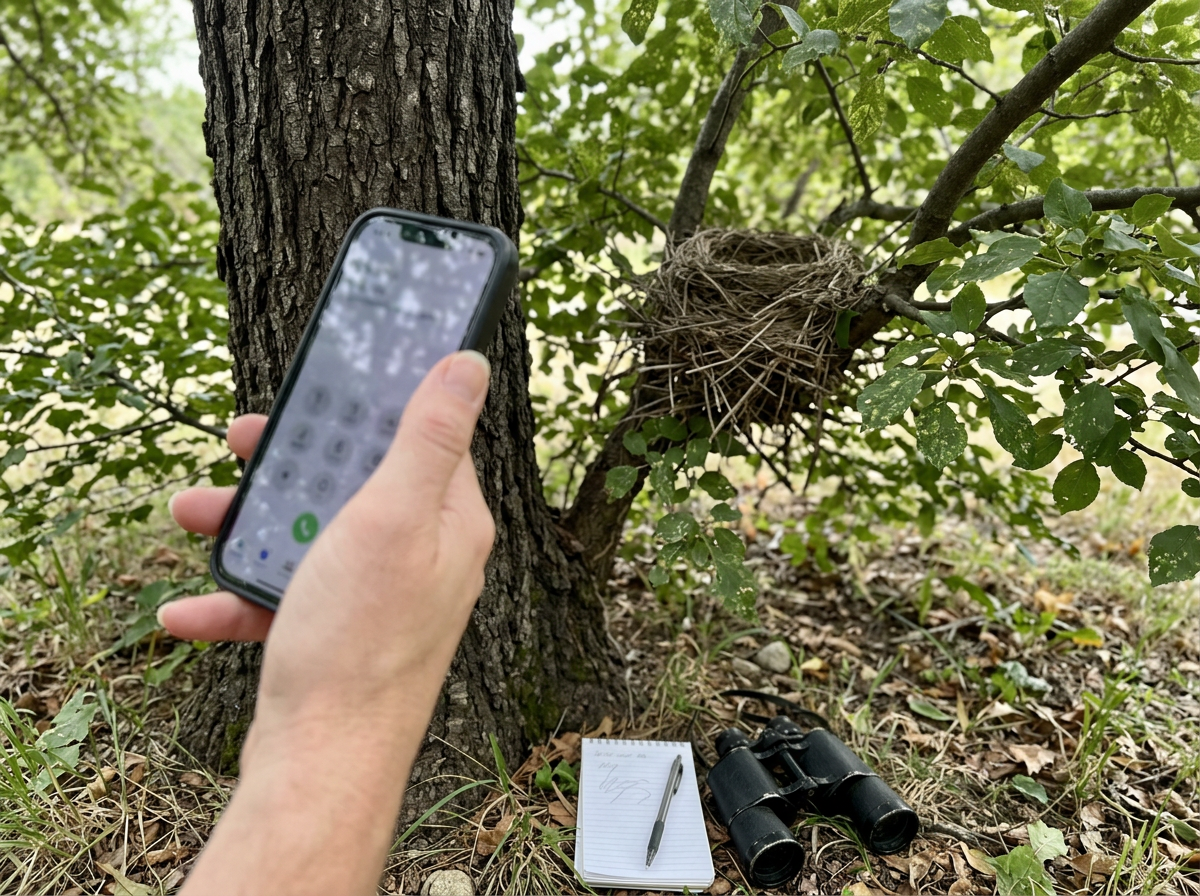
Call a federally licensed wildlife rehabilitator or contact your regional USFWS Migratory Bird Permit Office in these situations: the nest has eggs or nestlings and is in immediate danger, the adults have not returned after 4 or more hours, eggs are cold to the touch, nestlings are on the ground and not self-mobile, or you're unsure of the species and suspect it may be a raptor or other specially protected bird. You can find a licensed rehabilitator through the National Wildlife Rehabilitators Association directory or your state's fish and wildlife agency. This is not the moment to improvise.
If your situation is an empty or inactive nest that you've already moved successfully, there's nothing more to do. Clean up the original site, note what species used it if you can, and consider whether that spot might attract another nest next year. A little awareness of what birds choose and why can help you plan your yard or worksite to avoid conflict next season before it starts.
FAQ
I already moved the nest a few feet, and it had eggs. What should I do right now?
If you touched the nest briefly, the bigger legal issue is whether the nest is active (eggs or nestlings) and whether you disturbed it enough to count as a “take.” Stop further handling, take a non-disturbing photo for documentation, and contact a licensed wildlife rehabilitator or your regional USFWS Migratory Bird Permit Office to ask what to do next for your exact species and timing.
How can I tell if a nest is active if I do not see birds nearby?
Yes, a nest can be considered active even if you do not see adult birds at the moment, because adults may be away foraging. Treat it as active until a professional confirms otherwise, especially if eggs are present or you find newly hatched young, feather stubs, or food-begging behavior.
What information should I gather before contacting a wildlife rehabilitator or USFWS?
To call for help, have your photo reference, your exact location (yard, building, or jobsite), the nearest address or landmark, when you first noticed the nest, what you observed (eggs, nestlings, fledged feathers), and whether there are pets or construction activity nearby. This lets a rehabilitator judge urgency and decide if relocation or another response is appropriate.
After relocating, when is it too late to keep trying and I should get professional help?
For most nests with eggs or nestlings, you should not wait for “signs” after a DIY move. If adults do not return within 3 to 4 hours, or if the eggs feel cold to the touch, that is a strong indicator the situation needs professional handling immediately rather than more troubleshooting on your own.
Can I remove a nest that looks “abandoned,” but I am not sure the breeding is over?
If you are trying to move an empty nest, confirm it is truly inactive by looking for eggs or young and by checking whether any adults are actively building, incubating, or brooding. A recently failed nest may still be within the re-nesting window, so when unsure, treat it as active and get guidance.
What if the nest falls during cleanup or relocation attempts, but eggs are still there?
If the nesting material is intact but the nest cup has collapsed, the decision hinges on whether eggs or nestlings remain. If eggs are present and can be placed only in a short, careful emergency step, contact a rehabilitator right away, avoid adding heat or water, and do not attempt to incubate.
How strict do I need to be about placement distance and matching shade or height?
Distance and microhabitat matter, but species differences also matter, especially for birds that defend territories aggressively or choose very specific substrates. A practical compromise is to keep the new placement within roughly 10 to 15 feet and match height and shade, but if you cannot approximate those conditions, do not proceed and get professional direction.
Do I need to wear gloves, and does human scent actually cause birds to abandon nests?
You can use gloves if you need to handle the nest to reduce stress and protect yourself from parasites, but the key is to minimize time, avoid repeated checking, and avoid touching more than necessary. Even if scent is not the main issue, unnecessary contact increases disturbance and breaks the adults’ routine.
What deterrents are safe if I am worried a predator will find the relocated nest?
Do not attempt deterrents like glue, poisons, or chemicals near the nest, and avoid actions that could injure adults or nestlings. If predators are an issue, use temporary physical or visual barriers placed so they do not interfere with parent access, and stop the DIY approach if predation continues.
After moving or removing an inactive nest, what should I do to prevent another nest from starting there next season?
If it is a true inactive nest that you already moved or removed successfully, you can clean the original site, but keep note of the species if you can. Planning ahead helps prevent repeat nesting, for example by temporarily changing access to ledges, trimming branches that invite nesting during the season, and blocking entry to structures.
Next Article
Can You Move a Bird Nest With Eggs? What to Do Instead
Learn if you can move a nest with eggs, legal limits, safer alternatives, and steps to get help quickly.